Some children tell stories with their whole bodies: they gallop, roar and crawl through forts. Others prefer to tell them with their hands. Give them a tray with a strip of blue fabric for a river, a few stones, some twigs and a handful of animals, and they will lean in for half an hour, moving a fox across a bridge and muttering the plot under their breath.
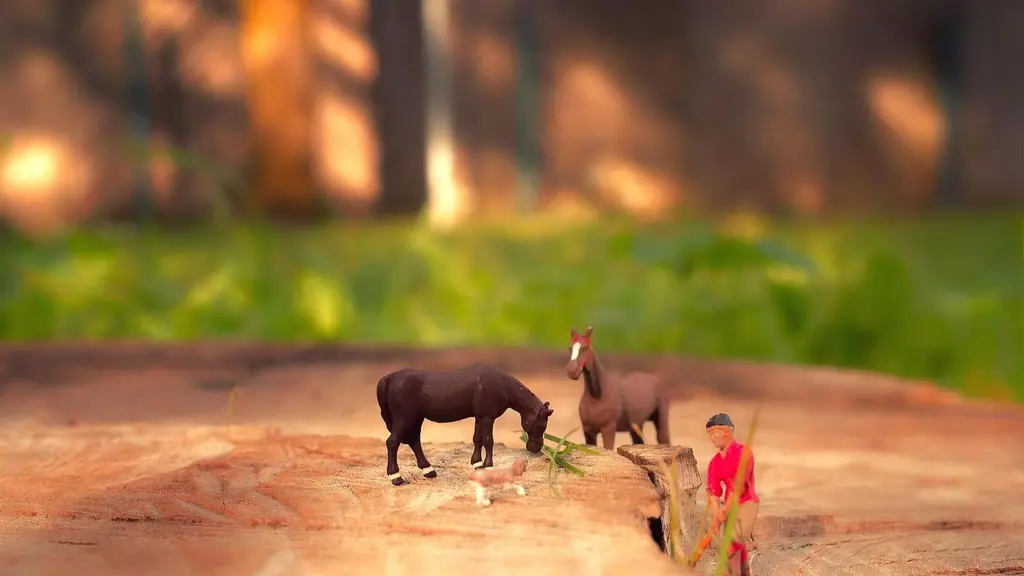
That is small-world play: a miniature landscape where toys become characters and children control the whole story from above. It works on a kitchen table, in a shoebox or along a low shelf, uses materials you already have, and is one of the calmest forms of pretend play there is. It particularly suits preschoolers and early school-age children who enjoy figures and fine detail.
The secret is the setup. A pile of animals in a bin is a toy collection. The same animals arranged around a pond, with a path leading somewhere interesting, are an invitation.
You’ll need
- A base: a shallow tray, baking sheet with a rim, low storage box lid, shoebox on its side or a clear shelf
- Ground cover: a fabric scrap (green felt for grass, blue for water, brown for earth), a tea towel or colored paper
- Natural materials: large pebbles, pine cones, bark pieces, twigs, shells, leaves (size checked for younger children)
- Figures: toy animals, people, vehicles or homemade characters on clothespins
- Simple structures: wooden blocks, small boxes, cardboard tubes, a cup turned upside down for a hill
- Optional extras: a paper sign or map, a small mirror for a pond (non-glass, shatter-resistant), scraps of yarn for paths kept short
Build a landscape in six steps
- Pick a theme together. Farm, ocean, forest, dinosaur valley or the moon. One theme per tray keeps the world readable.
- Lay the ground first. Spread the fabric or paper. Add a feature that divides the space: a river, a road or a fence line made of twigs.
- Add landmarks. One or two big things give characters somewhere to go: a block barn, a bark cave, a shell island.
- Place characters with a hint of story. Instead of lining animals up, put the sheep on one side of the river and the wolf near the trees. Leave a baby animal "lost" somewhere.
- Leave space empty. An uncluttered tray lets children add to it. Too much detail leaves nowhere to play.
- Step back and invite. "I wonder how the sheep will get across the river." Then let the child take it from there.
Theme ideas that last
| Theme | Base and materials | A question to start |
|---|---|---|
| Farm | Green felt, twig fences, a block barn, dried beans as feed for older children only | "The cows have escaped. Where did they go?" |
| Ocean | Blue fabric, large shells, pebbles, sea creatures, a boat | "A storm is coming. Where can the fish hide?" |
| Forest | Brown and green fabric, pine cones, bark, moss, woodland animals | "Someone is building a home in the forest. Who is it?" |
| Dinosaur valley | Large stones, a bowl of water as a lake, leaves, dinosaurs | "The volcano is rumbling. What happens next?" |
| Arctic | White fabric or paper, cotton batting snow (older children), polar animals, upside-down bowls as igloos | "The polar bears are hungry and the ice is cracking." |
| Town | Paper roads, block buildings, cars, people | "It's market day. What's for sale?" |
| Space | Black paper, foil planets, a cardboard rocket | "An astronaut has found a strange rock." |
Rotate themes every week or two rather than offering all of them at once. A tray that changes keeps its pull; a tray that is always the same becomes furniture.
Tray, box or shelf: which format?
- A tray is portable, easy to put away and keeps materials contained. Good for the kitchen table.
- A shoebox or crate on its side gives a back wall and a roof, which suits houses, caves and dollhouse-style stories. It also stores with the scene intact.
- A low shelf works as a permanent small world in a playroom corner, with a different theme on each level. Keep it at child height and anchored if it is a freestanding unit.
Variations by age
Preschool (3–5)
Keep it bold and sturdy. Use larger figures, chunky blocks and natural materials that are too big to swallow. Choose themes from their own life (a farm they visited, the park, a bathtime ocean). Join in as a character and narrate a little: "The duck is hiding under the bridge." Expect sorting and lining up as well as storytelling; both are part of play at this age.
Early school (5–8)
Children can design and build their own worlds from scratch, make signs and maps, and run longer stories over several days. Offer finer materials (smaller pebbles, beads for treasure, string for washing lines) if no younger children share the space. Invite them to write a short story about their world or draw a map so someone else can visit it. Two children sharing one tray is good practice in negotiating a plot.
If a toddler shares the house, set the small-world tray up on a table they cannot reach, or make a separate toddler version with large, mouth-safe pieces only.
Safety first
- Small parts are a choking hazard. The CPSC's small-parts rule covers products for children under 3; a small part is anything that fits entirely in its test cylinder, which approximates the throat of a child under 3. Many small-world materials (pebbles, shells, beads, dried beans, marbles, bottle caps) fall into this category. Keep them away from under-3s and any older child who still mouths objects.
- Supervise with natural materials. Check stones and shells for sharp edges, wash or brush off soil, and avoid berries, seeds and unknown plants. Leave living creatures outdoors.
- No magnets, button batteries or balloons in small-world kits shared with young children.
- Watch water. Bowls of water in a tray need an adult nearby; empty them straight after play.
- Keep string short. Yarn or string paths should be short pieces, never long loops, and are best avoided with young children.
- Store safely. Lidded boxes on a high shelf for any kit containing small pieces.
See our safety page and toy safety by age for more.
What they’re learning
What they're learning
- Telling stories. Moving characters through a landscape is a natural way to practice sequencing and narration. The CDC's milestones for 4-year-olds include telling what comes next in a well-known story.
- Using symbols. ZERO TO THREE describes pretend play as an early use of symbols, where one thing stands for another, like a scrap of blue fabric becoming a river.
- Open-ended thinking. Penn State Extension describes "loose parts" such as stones, shells and blocks as materials children can move, combine and redesign, supporting imagination and problem solving.
- Keeping it in proportion. A major 2013 review of the research cautions against strong claims that pretend play alone causes particular skills. Small-world play earns its place as calm, absorbing, enjoyable play.
Grown-up tip
Grown-up tip: Photograph each finished world before tidying up. Children are much happier to pack a scene away when they know it is saved, and the photos make a lovely book of "places we have invented."
Next steps
When a tray world gets too small, it is time to go bigger: a cardboard box can become a whole town, as in our guide to cardboard box construction. For gathering more open-ended materials, see loose parts in the backyard, and for the idea behind it all, read open-ended play explained. A stack of imaginative play prompt cards beside the tray will give storytellers a fresh twist whenever they need one.
Sources
- Small Parts Ban and Choking Hazard Labeling, U.S. Consumer Product Safety Commission
- Loose parts: What does this mean?, Penn State Extension, Better Kid Care
- Stages of Play from 24–36 Months: The World of Imagination, ZERO TO THREE
- The impact of pretend play on children's development: a review of the evidence, Psychological Bulletin (Lillard et al., 2013), via PubMed
- Milestones by 4 Years, Centers for Disease Control and Prevention