Every family with more than one child knows the moment: a board game ends, someone wins, someone else sweeps the pieces off the table. Competition has its place, but when siblings are three, five or eight years apart, a fair race is nearly impossible. The older child either wins every time or is told to "let them win," and nobody enjoys that.
Cooperative games flip the setup. Everyone plays against the clock, the floor, the story or the mess, and the whole team wins or loses together. The youngest player contributes something real, the oldest gets a job worth doing, and the usual squabble about who won simply has nothing to attach to.
Below are ten cooperative games that need only household materials, with notes on adjusting each for big age gaps.
You’ll need
- A flat bedsheet or lightweight blanket
- Soft balls, rolled-up socks or a beach ball
- Sofa cushions, pillows or folded towels
- Sheets, clothespins or clips for a fort
- Building blocks or cardboard boxes
- Paper, crayons or markers
- A kitchen timer or phone timer (used by a grown-up)
- Balloons, for the balloon game only and only with an adult in charge (see the safety notes)
Ten games where everyone wins together
- Bedsheet parachute. Everyone holds an edge of a flat sheet. Put a soft ball or a few rolled socks in the middle and work together: bounce it as high as possible without it falling off, roll it around the edge in a circle, or try to keep three balls on at once. Younger children can stand at the corners, where it is easier to grip.
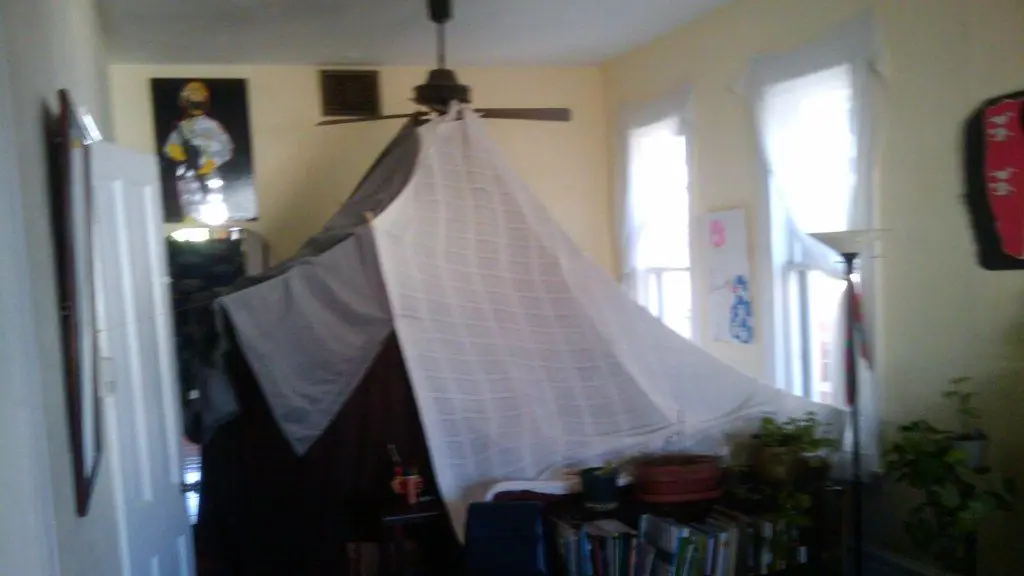
- The joint fort build. Give the team one goal ("a fort big enough for all of us and the dog's bed") and assign jobs: an architect who decides where the chairs go, a builder who clips sheets, a decorator in charge of cushions and books. Rotate jobs next time. Our guide to building a blanket fort that stands up and stays safe covers the structure.
- Story chain. One person starts a story with a single sentence, and each player adds the next. The goal is a story that makes sense from start to finish, which means everyone has to listen. A younger child can add a sound effect or an animal instead of a full sentence. Our fort-to-story-world prompts give easy openings.
- Beat-the-timer tidy. Set a timer for five minutes and challenge the whole team to beat it. Give each child a category: the toddler collects soft toys, the preschooler finds every block, the older child returns books. If the room is done before the buzzer, the team wins.
- Balloon keep-up. The team tries to keep one balloon off the floor, counting every tap together. Set a family record and try to break it. Read the safety notes first: this is an adult-run game.
- Cushion islands. Spread cushions or folded towels on the floor. Play music; when it stops, everyone must be on an island. After each round remove one island, so the team has to squeeze together, piggyback or share. Nobody is ever out. Keep cushions on a rug, not a slippery floor.
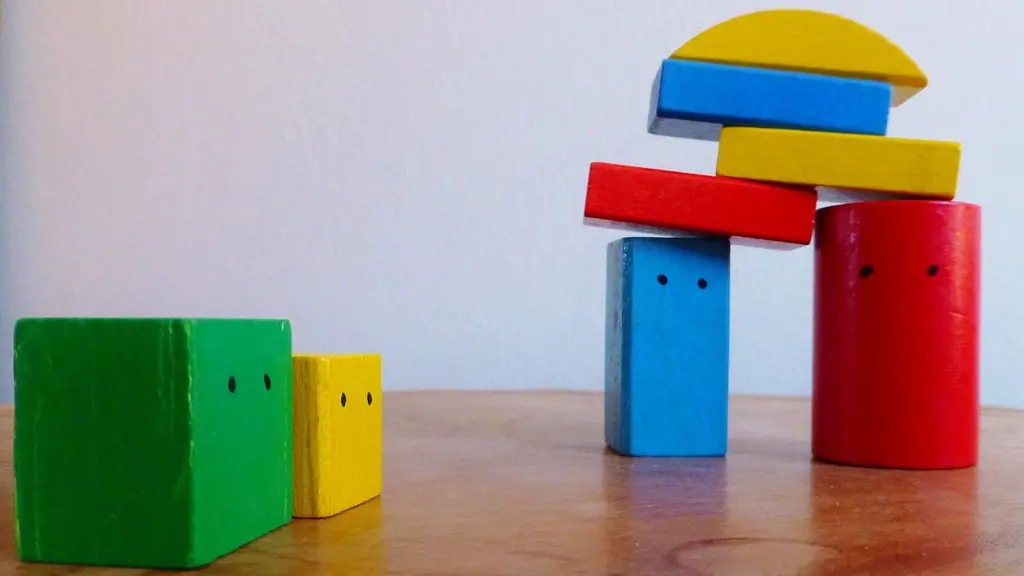
- Team tower. Set a target: a tower as tall as the youngest child, or one that can hold a stuffed animal on top. Each player adds one block in turn. If it falls, count to three together and start again.
- Mirror and conductor. One child is the conductor and makes slow movements; the others copy as a mirror. Then switch. For a cooperative twist, the "mirrors" try to move so perfectly in time that an adult cannot tell who is leading.
- Combined scavenger hunt. Make one list for the team, not one each: something soft, something round, three things that are blue, something older than Grandma. Older children read the list; younger ones are the fast runners. Use our rainy-day activity cards for more ideas.
- Fold-over creatures. Fold a sheet of paper into three. The first person draws a head, folds it out of sight, and passes it on. The second draws a body, the third draws legs. Unfold together and name the creature as a team.
Adapting for big age gaps
The trick is giving each child a role that is genuinely needed, rather than a watered-down version of the older child's job.
| Game | Toddler or young preschooler | Preschool (3–5) | Early school (5–8) | Big kids (8–12) |
|---|---|---|---|---|
| Bedsheet parachute | Holds a corner alongside a grown-up, shouts "go!" to start each bounce | Holds an edge, counts bounces | Calls out the pattern ("high, low, roll") | Leads the game, invents challenges |
| Joint fort build | Carries cushions, chooses the blanket | Decorates, fetches books and flashlights | Clips sheets with an adult | Plans the layout, tests stability |
| Story chain | Adds a sound or an animal | Adds a sentence with help | Adds a sentence | Keeps the plot on track, ends the story |
| Beat-the-timer tidy | Soft toys into one basket | Blocks into the block bin | Sorts by category | Shelves books, checks the room at the end |
| Team tower | Places a big block at the base | Adds blocks | Counts and measures | Engineers a stable base |
Two more adjustments help. First, the older child can be the "game keeper" who explains the rules, which gives them status without competition. Second, keep rounds short. A five-minute game played three times usually goes better than one fifteen-minute marathon.
Safety first
- Balloons. The U.S. Consumer Product Safety Commission advises keeping deflated balloons away from children younger than 8. Uninflated balloons and pieces of popped balloons can choke or suffocate a child. An adult should inflate the balloon, stay in the room, pick up every piece immediately if it pops, and store uninflated balloons out of reach. If a toddler or a child who mouths objects is playing, use a beach ball or a light scarf instead.
- Small parts. Keep game pieces, small blocks and marker caps away from children under 3 and from any child who still mouths objects.
- Forts. Keep them low and stable, with nothing heavy on the roof (sheets and light blankets only), an open side for air, and no cords, ropes or strings where young children's necks could catch, including window-blind cords. Use cool, battery-operated LED lights only.
- Active games. Clear the floor, push back furniture with sharp corners, use cushions on rugs rather than slippery floors, and do not let children stand on furniture or pile on top of each other.
- Supervision. Mixed-age play needs an adult nearby. Big kids can lead, but they are not babysitters.
- Our safety page explains the general principles.
What they’re learning
The American Academy of Pediatrics describes play as one of the ways children learn to work in groups, share, negotiate and resolve conflicts. The Center on the Developing Child at Harvard notes that preschoolers are beginning to play cooperatively and often regulate each other's behavior, and it lists group storytelling, copy games and turn-based games among activities that let children practice attention, working memory and self-control. In cooperative games, children may also practice taking turns, listening, and adjusting their plan when something goes wrong. Every child develops at a different pace, and a game that frustrates one sibling this month may click next month.
Grown-up tip
If a game starts to go sideways, change the challenge rather than stopping the game: "New rule, we can only use our elbows," or "Let's see if we can do it in slow motion." A silly rule shift often resets the mood faster than a referee.
Making it a habit
Cooperative games slot easily into the corners of a day: a beat-the-timer tidy before dinner, a story chain at bath time, a parachute game while the oven heats up. If you want a bigger family occasion, our family fort night plan turns the joint build into an evening. More ideas for playing together live under Family Bonding.
Sources
- The Importance of Play in Promoting Healthy Child Development and Maintaining Strong Parent-Child Bonds, Pediatrics (American Academy of Pediatrics)
- Enhancing and Practicing Executive Function Skills with Children from Infancy to Adolescence, Center on the Developing Child, Harvard University
- Holiday Safety, U.S. Consumer Product Safety Commission
- Play, National Association for the Education of Young Children
- Positive Parenting Tips, Centers for Disease Control and Prevention