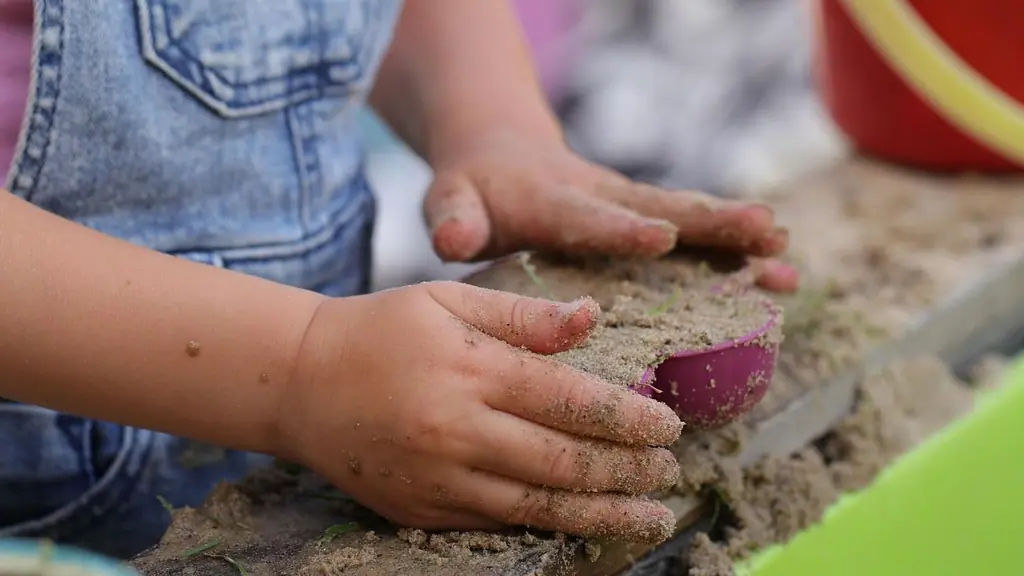
Pour a few inches of dry oats into a plastic tub, add a scoop and a couple of cups, and a toddler can be absorbed for longer than you'd think possible. Sensory bins are just that: a container of something interesting to touch, pour and dig through, plus a few tools. They're cheap, they work indoors on a cold day, and they suit children who love messy, hands-on play as well as children who prefer to explore textures at their own pace.
They also come with real hazards that are easy to overlook in a cheerful photo online. The wrong filler for the wrong age can be a choking risk, some popular fillers should not be in a home with young children at all, and water play needs a grown-up within arm's reach. This guide sorts the safe from the risky, age by age.
You’ll need
- A wide, shallow plastic tub or storage box with a lid (a lid makes storage and rest breaks easy)
- An old sheet, shower curtain or splat mat to go underneath
- One filler chosen for your child's age (see the table below)
- Scoops, measuring cups, spoons, funnels, small buckets and sieves, all larger than a child's mouth for under-3s
- A few larger theme objects: big toy animals, chunky vehicles, wooden blocks, large pinecones
- A dustpan and brush, a towel and a handheld vacuum for cleanup
Choosing a filler by age
| Filler | Toddlers (1–3) | Preschool (3–5) | Early school (5–8) | Notes |
|---|---|---|---|---|
| Water (an inch or two in a tub) | Yes, with an adult within arm's reach | Yes, close supervision | Yes, supervised | Empty it the moment play ends |
| Dry rolled oats | Yes | Yes | Yes | Soft, easy to sweep; check for oat sensitivities |
| Large dry pasta shapes (tubes, shells, bows) | With caution, close supervision | Yes | Yes | Contains wheat; skip for wheat allergy |
| Shredded paper or fabric scraps | Yes | Yes | Yes | No plastic film or bags |
| Play dough or cloud dough | Yes, supervised | Yes | Yes | Avoid if anyone has a wheat allergy, or use a wheat-free recipe |
| Dried rice, lentils, small beans | No | Older preschoolers who no longer mouth objects, supervised | Yes | Small enough to choke on and to push into ears or noses |
| Sand (play sand) | Supervised | Yes | Yes | Damp sand reduces dust |
| Small pebbles, beads, buttons, dried corn | No | No | Supervised, if at all | Choking hazards; keep out of homes with toddlers |
| Water beads | Never | Never | Never | See the safety box below |
Setting up and playing
- Pick the spot. Choose a hard floor or a table at the child's height, away from stairs, with the sheet spread wide underneath. Outdoors is ideal in good weather.
- Fill shallow. Two or three inches (5 to 7 cm) of filler is plenty. Deeper bins mean more spills, not more fun.
- Add three or four tools. A scoop, a cup, a funnel and a container to fill is a complete kit. Too many tools turn into a pile.
- Show, then step back. Pour once yourself so your child sees what the materials do, then let them lead. Describe what they're doing ("you filled the big cup to the top") rather than directing.
- Set simple bin rules. "The oats stay in the bin" and "We scoop, we don't throw" are enough. If a rule is broken, put the lid on for a short break and try again later.
- Change themes, not fillers. Keep the same filler for a week and swap the extras: farm animals one day, construction vehicles the next, measuring cups for "baking" after that.
- Clean up together. Sweep spills back into the bin, wipe the tools and put the lid on. Discard food-based fillers that get damp, dirty or smell musty.
Variations by age
Toddlers (1–3). Stick to large tools and soft, non-choking fillers like oats, water and shredded paper. Toddlers explore with their mouths, so assume some will be tasted and choose accordingly. Keep sessions short, sit right beside the bin, and end when interest fades.
Preschool (3–5). Add pouring challenges, sorting by color or size with large objects, and pretend play: a bin of oats becomes a bakery, a bin of water becomes a car wash. Children who reliably no longer mouth objects can try smaller dry fillers with supervision.
Early school (5–8). Try measuring and estimating ("How many cups fill the jar?"), floating and sinking in water, burying and digging up "fossils" (large shells or toy dinosaurs), or building a small-world landscape. Our guide to small-world play setups has more ideas for this age.
Safety first
- Do not use water beads, ever. A federal safety standard for water beads took effect in March 2026, but the U.S. Consumer Product Safety Commission still urges caregivers to remove water beads from any environment with children. Swallowed beads can keep growing inside the body and cause blockages that may need surgery; beads pushed into ears can cause lasting damage. Dry beads can be as small as a pinhead and almost invisible on the floor. If you think a child has swallowed one or put one in an ear or nose, get medical care right away and call Poison Help at 800-222-1222.
- Choking. The CPSC bans small parts in toys for children under 3. Keep beads, buttons, pebbles, coins, marbles, small lids, dried beans, rice and button batteries out of bins used by toddlers or any child who mouths objects. Keep balloons out of play for children under 8.
- Water. The American Academy of Pediatrics warns that young children can drown in as little as an inch or two of water, quickly and silently. Stay within arm's reach during any water play, never leave a child alone with a water bin even for a moment, and tip the water out as soon as play ends.
- Allergies. Check for food allergies before using pasta, flour-based doughs or other food fillers, and think about visiting children too.
- Hygiene. Wash hands before and after, use fresh water each session, and replace food fillers regularly.
- Slips and spills. Wipe up water and sweep dry fillers promptly; rolled pasta and spilled water on hard floors are slip hazards.
See our safety principles for more.
What they’re learning
What they're learning
Scooping, pouring and sifting give small hands a workout in control and coordination, and filling containers invites early math talk: full, empty, more, less, heavy, light. Pretend themes bring in language and storytelling, and sharing a bin with a sibling means turn-taking. NAEYC, the national association for early-childhood educators, describes play as a foundation for self-regulation, language and thinking skills. For children who are cautious about textures, a bin can be a low-pressure way to explore at their own pace, with tools to hold if touching the filler directly feels like too much. Let them watch, use a spoon or pass for today; there's no need to push.
Grown-up tip
Grown-up tip
Keep two lidded bins in rotation, one dry and one "wet day" bin of tools that you fill with water only when you're free to sit beside it. Store dry fillers in their bin with the lid on between sessions so setup takes thirty seconds.
Where to go next
Sensory bins sit happily alongside other hands-on play. Try a mud kitchen when the weather allows, or see sensory-friendly playroom ideas for setting up a calm space indoors. The toddlers age guide collects more activities for the youngest players.
Sources
- Water Beads, U.S. Consumer Product Safety Commission
- Small Parts Ban and Choking Hazard Labeling, U.S. Consumer Product Safety Commission
- Choking Prevention for Babies & Children: What Every Parent Needs to Know, American Academy of Pediatrics (HealthyChildren.org)
- Drowning Prevention for Curious Toddlers: What Parents Need to Know, American Academy of Pediatrics (HealthyChildren.org)
- Play, National Association for the Education of Young Children (NAEYC)