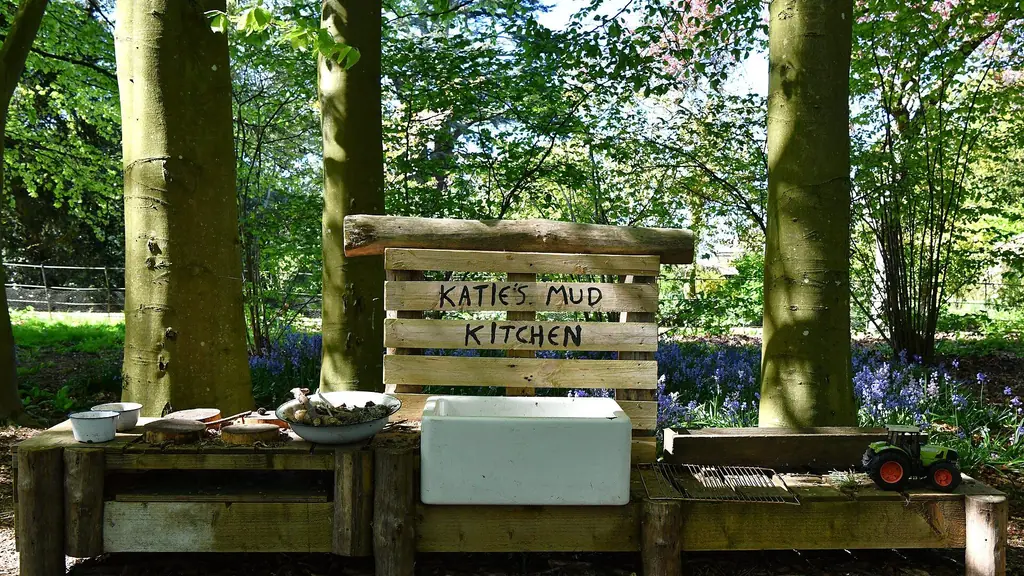
Give a three-year-old a saucepan, a spoon and a patch of dirt, and within minutes there will be soup on the menu. A mud kitchen takes that instinct and gives it a home: a sturdy counter at child height, a few pots and pans, a water supply and a corner of the yard where getting filthy is the whole point.
The appeal lasts longer than you might expect. Toddlers fill and dump. Preschoolers run cafés and bake birthday cakes for the dog. Six- and seven-year-olds invent potions, follow "recipes" and argue happily about whether the pie needs more petals. You do not need pallets, power tools or a weekend of carpentry to make one. An old table or a couple of strong crates will do.
You’ll need
- A low, stable surface: an old side table, a child-size picnic table, a sturdy outdoor bench, or two heavy-duty plastic crates with a smooth board across them
- A washing-up bowl or plastic tub to act as a "sink"
- Metal pots, pans, muffin tins and baking trays (thrift stores are ideal)
- Wooden and metal spoons, ladles, a potato masher, a sieve and a funnel
- Plastic or metal jugs and measuring cups
- Old plastic or metal bowls and plates (no glass or china)
- A water source: a large jug, a water carrier with a tap, or a watering can
- Clean soil or garden earth, plus sand if you have it
- Natural "ingredients": fallen leaves, petals, pinecones, grass clippings, small sticks
- Hooks, an old shelf or a crate on its side for storage
- Optional: a chalkboard or board for a menu, a shower curtain or tarp for underneath, an apron or old shirt
Building the kitchen
- Choose the spot. Look for a flat, level patch near (but not right beside) the house, with some shade, where mud splashes will not matter. Check that cats, dogs and foxes do not use the area as a toilet. Avoid corners next to fences that hide the play from view.
- Check the soil. Use earth from a part of the yard that has not been treated with weedkiller, pesticide or fertilizer, and is away from pet areas, driveways and old painted structures. If in doubt, dig from a different bed or buy a bag of plain topsoil.
- Set up the counter. Place your table or crates on firm ground and test them: lean on the edge and push from the side. Nothing should tip, wobble or slide. If using crates and a board, pick a board that is smooth and splinter-free, and screw or clamp it so it cannot slip off. The working height should be roughly at the child's waist.
- Add the sink. Set the washing-up bowl into the counter surface or on a low crate beside it. Keep water depth shallow.
- Sort the utensils. Hang spoons and ladles from hooks, or stand them in a tin. Stack pans on a low shelf or a crate turned on its side so children can see what is there and tidy up themselves.
- Make an ingredients corner. A shallow tray or a few small buckets of soil, sand, leaves and pinecones make the "pantry." Refill from the yard as play goes on.
- Sort out water. Fill a jug or water carrier for each session rather than leaving a container full. Empty everything at the end of play.
- Set the tidy-up routine. At the end of each session: tip out water, rinse the tools under a hose or in a bucket, then everyone washes hands with soap and water.
Variations by age
| Age band | What to offer | What play often looks like |
|---|---|---|
| Toddlers (1–3) | Large spoons, chunky cups, a shallow tub of soil and a small amount of water. Big utensils only; no small items. | Filling, pouring, stirring and dumping, over and over. Constant close supervision. |
| Preschool (3–5) | A full set of pans, a muffin tin, a menu board, some flowers and leaves to "decorate." | Cafés, birthday cakes, soup for teddies, serving grown-ups, role play with siblings. |
| Early school (5–8) | Measuring jugs, a sieve, a funnel, recipe cards to fill in, a timer. | Potions, mixing experiments ("what happens if I add sand?"), writing menus, running a shop with prices. |
You can also link the kitchen to a garden patch. Older children who grow a few herbs or edible flowers in a separate, clean bed learn the difference between "mud food" and real food. The Royal Horticultural Society offers gardening ideas for families and schools if you want to take that further.
Making it last through the seasons
- Summer: Add a shade sail or umbrella. Water play cools children down, but keep water shallow and empty it after use.
- Fall: Leaves, seeds, acorns and pinecones make a free, ever-changing pantry. Avoid offering whole acorns or similar items to children who still mouth objects.
- Winter: Ice and snow make "ice cream" and frozen "jelly." On frosty days, metal utensils can be very cold on bare hands; give children gloves.
- Spring: Petals and new grass. A good time to clean everything, check wood for splinters and refresh the soil.
Safety first
- Hand-washing: Wash hands with soap and water after every session and before eating. Keep snacks away from the mud kitchen.
- Animal waste: The NHS explains that toxocariasis spreads when soil contaminated by dog, cat or fox feces gets into the mouth. Check the area before play, keep pets and visiting animals away, cover the soil tub when not in use and teach children not to eat soil.
- Water supervision: Toddlers can drown in an inch or two of water. Stay within arm's reach, keep water shallow and empty every jug, bucket and tub after play.
- Wood and stability: Use a stable table or crates; nothing should tip if a child leans or climbs. Sand or replace splintered wood, and check for protruding nails or screws.
- Small items: For toddlers or any child who mouths objects, skip pebbles, acorns, berries and small pinecones. Use only large utensils.
- What goes in the "pantry": Never use garden chemicals, fertilizer pellets or unknown plants and berries. Teach "mud food is pretend food."
- Cuts and cleanups: Cover cuts and scrapes with a waterproof bandage before play. See our general safety guide.
What they’re learning
Mud kitchens combine sensory exploration with pretend play. The National Association for the Education of Young Children describes play as central to how children from birth to age 8 learn, and reviews of research on nature play link playful outdoor time with well-being and social skills. While cooking up mud pies, children may practice pouring and spooning (fine-motor control), early math language such as "more," "full" and "half," taking turns, negotiating roles and telling stories.
Grown-up tip
Keep a "mud bucket" of warm water and an old towel by the back door, plus a basket for dirty clothes. Ten seconds of rinsing outside saves twenty minutes of cleaning inside, and children quickly learn the routine.
More outdoor ideas
A mud kitchen pairs well with loose parts in the backyard, such as crates and planks for building a café counter or a delivery truck. If you are making the case for more outdoor time in general, our explainer on why nature play matters covers the research. For indoor days, the same pouring-and-mixing appeal works on a smaller scale with sensory bins and small-world play setups.
Sources
- The Benefits of Children's Engagement with Nature: A Systematic Literature Review, Children, Youth and Environments (Tim Gill, 2014)
- Play, National Association for the Education of Young Children
- Drowning Prevention for Curious Toddlers: What Parents Need to Know, American Academy of Pediatrics (HealthyChildren.org)
- Toxocariasis, NHS
- How to get children interested in gardening, Royal Horticultural Society