Screens are part of family life, and this isn't a list designed to make anyone feel bad about that. It's for the moments when you'd like an alternative ready: the half hour before dinner, a slow Sunday morning, a car-free afternoon at home, or a deliberate screen-free day. The hardest part of turning screens off is often thinking of what to do instead, especially when a tired child is asking and your own energy is low.
So the lists below start with ideas that need almost no preparation and use things most homes already have. They're grouped by age band, but plenty of children will enjoy ideas from a band above or below; use whatever fits your child.
What the guidance actually says
It helps to know what the major health organizations recommend, because the headlines don't always match the guidance.
| Age | What the guidance says | Source |
|---|---|---|
| Under 2 years | Sedentary screen time is not recommended | World Health Organization (2019) |
| 2–4 years | No more than 1 hour of sedentary screen time a day; less is better | WHO (2019) |
| All ages | Make a Family Media Plan, keep some times and places media-free, and model the habits you want to see | American Academy of Pediatrics (2026) |
In January 2026 the American Academy of Pediatrics replaced its earlier media guidance with a new policy statement, Digital Ecosystems, Children, and Adolescents. Rather than setting hour limits by age, it focuses on the quality and context of media use, on conversation, and on what screens may be displacing, and it asks technology companies to design products with children's needs in mind.
The AAP also frames its family guidance around the "5 C's": your child, the content, how children learn to calm down without media, what screen time may be crowding out, and communication about media. The crowding-out question is the useful one here. Activity guidelines give a sense of what play needs room for:
- WHO: children aged 1 to 4 should get at least 180 minutes of varied physical activity a day, and for 3- and 4-year-olds at least 60 of those minutes should be moderate to vigorous.
- CDC: children aged 3 to 5 should be active throughout the day, and children and teens aged 6 to 17 need at least 60 minutes of moderate-to-vigorous activity daily, with muscle- and bone-strengthening activity on at least three days a week.
None of this requires a perfect day. It simply means building in plenty of time for the kinds of play below.
Toddlers (1–3)
Zero prep
- Pots, pans and wooden spoons on the kitchen floor
- Posting game: drop large blocks or balls through a hole cut in a shoebox lid
- Peekaboo with a scarf, or "where's teddy?" hide and find
- Dancing to songs you sing together
- Reading board books together, with lots of pointing and naming
A little prep
- A table tent den with a sheet over the kitchen table
- Water play in a shallow tub with cups and sponges, with you right beside them
- A cushion trail across the floor to crawl, climb and roll over
- Big crayons on a large sheet of paper taped to the floor
- Bubbles blown by an adult for chasing and popping
Preschool (3–5)
Zero prep
- "Floor is lava" with cushions as stepping stones
- Simon says, freeze dance and animal walks (bear crawl, frog jump, crab walk)
- Helping with real jobs: matching socks, washing vegetables, sweeping
- Telling a story together, one sentence each
- A walk to look for five red things, three dogs or one interesting leaf
A little prep
- A dress-up box with scarves, hats and old bags
- Play dough with cookie cutters and a rolling pin
- A blanket fort for reading or a pretend camp
- A small-world tray of toy animals and blocks
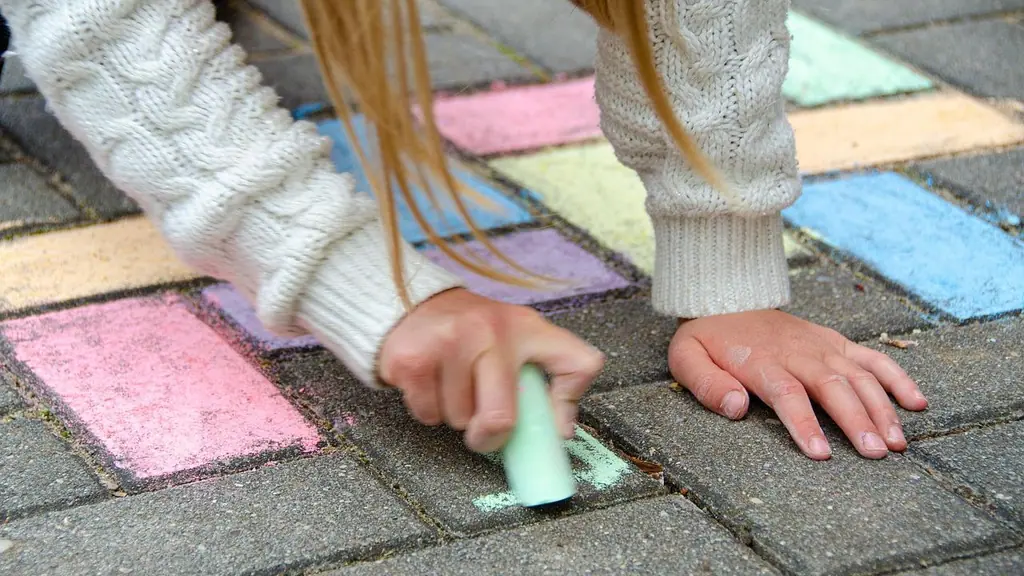
- Painting with water on a fence or sidewalk outdoors
Early school (5–8)
Zero prep
- Card games: snap, go fish, war, matching pairs
- I spy, twenty questions and "would you rather"
- Drawing a map of your street or a treasure island
- Hopscotch, tag and catch outside
- Building the tallest tower possible from whatever blocks you have
A little prep
- An indoor obstacle course from cushions, chairs and tape
- A paper-cup and straw building challenge
- A homemade board game with a drawn track and dice
- A scavenger hunt with picture or word clues
- A puppet show from socks or paper bags, with a sofa as the stage
Big kids (8–12)
Zero prep
- Strategy board games, chess, checkers and card games like rummy
- Writing and illustrating a comic strip
- Cooking or baking with an adult nearby
- A bike ride, scooter loop or ball game in a safe outdoor space, with a helmet for wheels
- Reading a series, then talking about it at dinner
A little prep
- An ambitious fort with planning, bracing and a floor plan
- A cardboard engineering project: a marble run, a bridge or a vehicle
- Learning a skill from a book: knots, origami, juggling, simple sewing
- A family quiz night with rounds they write themselves
- Gardening, bird-watching or a backyard nature journal
Safety first
- Supervise by age. Toddlers and preschoolers need a grown-up close by, especially for water play and climbing. Stay within arm's reach of young children around any water, and empty tubs right after use.
- Age-appropriate materials. No small parts, marbles, balloons, button batteries or small magnets for children under 3 or any child who still mouths objects.
- Stable structures. Keep forts and obstacle courses low, use furniture that can't slide or tip, and put nothing heavy on fort roofs.
- No cords near necks. Keep string, ribbon and rope games for older children, and keep play spaces away from blind cords.
- Cool lights only in dens and forts: battery LED lanterns or flashlights, never candles or hot bulbs.
- Outdoors and wheels. Helmets for bikes and scooters, sun protection and water on hot days, and clear boundaries for where children can go.
See our safety principles for more.
What they’re learning
What they're learning
The American Academy of Pediatrics' The Power of Play report describes play as a route to social-emotional, language, cognitive and self-regulation skills, and notes that media use can take time away from active, social and imaginative play. It also points out that simple, inexpensive things such as blocks, balls, crayons and boxes, together with a grown-up's attention, do more than elaborate electronic toys. The activities above cover that range: moving bodies, problem-solving, pretend and plenty of talk.
Grown-up tip
Grown-up tip
Write ten favorite ideas from this list on slips of paper and keep them in a jar. When someone says "I'm bored," they pull a slip. Our printable rainy-day activity cards work the same way, and the screen-free week chart helps if you're planning a whole week.
If you'd like to set household screen rules together, see our guide to making a family media plan that leaves room for play.
Sources
- Helping Kids Thrive in a Digital World: AAP Policy Explained, American Academy of Pediatrics (HealthyChildren.org)
- Kids & Screen Time: How to Use the 5 C's of Media Guidance, American Academy of Pediatrics (HealthyChildren.org)
- To grow up healthy, children need to sit less and play more, World Health Organization
- Child Activity: An Overview, Centers for Disease Control and Prevention
- The Power of Play: A Pediatric Role in Enhancing Development in Young Children, Pediatrics (American Academy of Pediatrics)