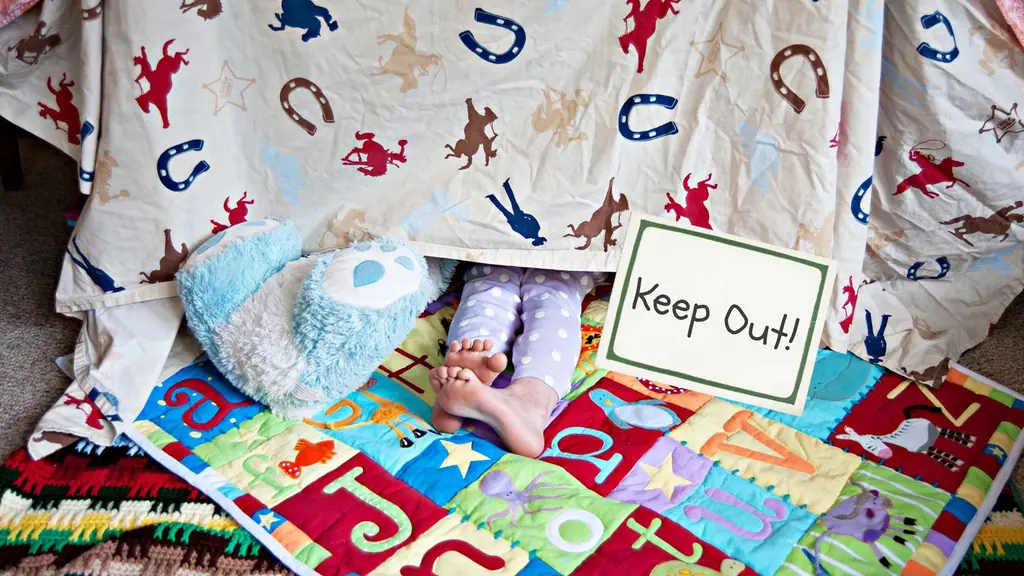
Toddlers do not need an elaborate fort. Give a one- or two-year-old a sheet over the kitchen table and you have given them a small, dim, private room at exactly their height, with a doorway they can open and close themselves. For a lot of toddlers, that is the most exciting place in the house.
The table tent is the simplest den there is. There are no chairs to slide, no clips to pinch fingers and no roof to sag, because the tabletop does all the structural work. It takes two minutes to set up and two minutes to put away, and it works in any home with a solid table. This guide covers how to set it up, why low enclosed spaces appeal so much to toddlers, a handful of play ideas, and the safety points that matter most for this age.
Preschoolers enjoy it too, especially as a base for pretend games, so siblings up to about 5 can share it.
You’ll need
- A sturdy table that does not wobble: a kitchen or dining table is ideal
- One flat sheet or light blanket large enough to reach the floor on two or three sides
- A few floor cushions or a folded quilt for inside
- Board books and a few soft toys or toy animals
- A battery-powered LED push light or lantern, handled by an adult
Setting up the table tent
- Clear the table completely. Remove everything from the tabletop: fruit bowls, mail, mugs, placemats and especially any tablecloth that a child could pull. A bare table is a safe table.
- Push the chairs away. Move chairs back from the table or into another room so toddlers cannot use them to climb onto the tabletop.
- Check for wobble. Push down on each corner. If the table rocks, folds or has a drop leaf that could collapse, pick another table or skip the activity.
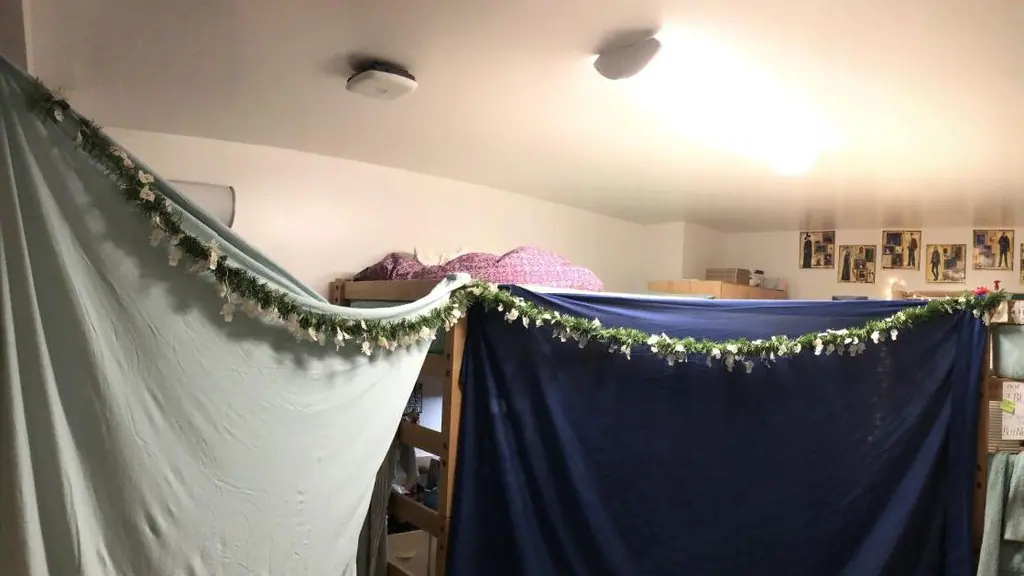
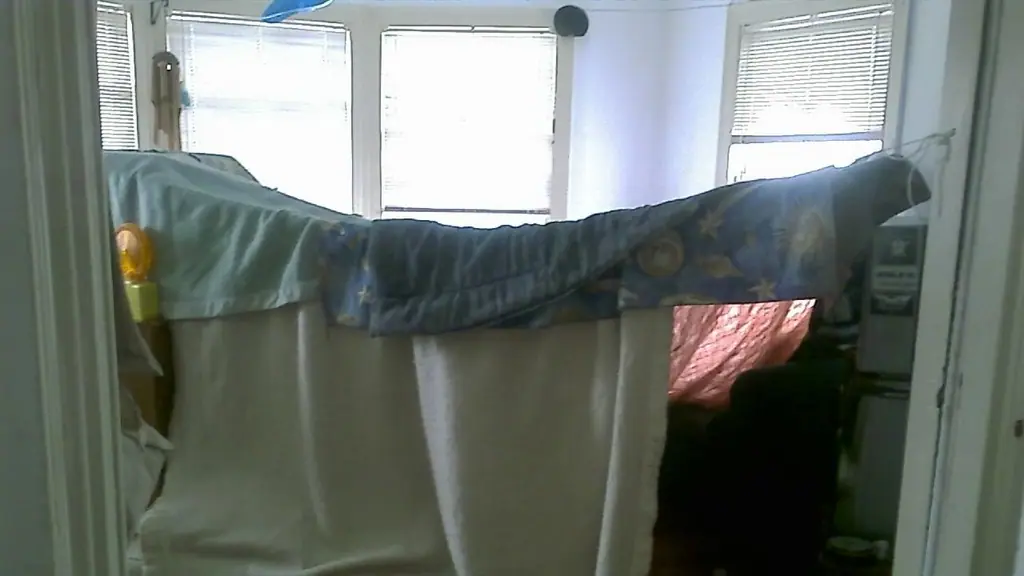
- Drape the sheet. Lay a light sheet over the top so it hangs to the floor on two or three sides. Leave the fourth side open, or fold one side up over the tabletop as a doorway. Nothing needs to be clipped; the sheet simply rests there.
- Make it cozy. Add a cushion or folded quilt on the floor underneath, a basket of board books and one or two favorite toys.
- Show the way in. Crawl in yourself first, or peek in from the doorway and invite your toddler to join you.
Why toddlers love a low den
Small enclosed spaces tap into games toddlers have been playing since babyhood. HealthyChildren.org, the American Academy of Pediatrics' site for parents, explains that between about 8 and 12 months babies begin to understand that objects still exist when out of sight, and it recommends peekaboo as a way to play with that idea. A table tent is peekaboo on a bigger scale: the child disappears behind the sheet, then reappears, and they are the one in control of when.
A den is also a calm, contained spot in a busy room. Some toddlers retreat inside for a few quiet minutes with a book, then burst back out ready to play again. Others turn it into a home for their toys. ZERO TO THREE describes how, between 18 and 24 months, toddlers often act out everyday actions such as stirring a pot or sweeping the floor, and how between 24 and 36 months they begin using one object to stand for another. A table tent gives that early pretend play a setting: a kitchen, a bed for teddy, a cave for a toy bear.
Every child develops at their own pace, so treat ages as rough guides. Some toddlers dive straight in; others prefer to watch from the doorway for a while first. Both are fine.
Play ideas inside the tent
- Peekaboo door. Sit outside and lift the sheet flap: "Where did you go? There you are!" Then swap, so your toddler lifts the flap to find you.
- Board-book hideout. Read a couple of short books together inside. The enclosed space cuts down on distractions and makes story time feel special.
- Animal hideout. Hide a few toy animals in the den and go on an "animal hunt" together. Name each one as it is found, and make its noise.
- Light play. With the room lights dimmed, an adult can hold an LED push light or flashlight and let the beam dance on the sheet walls. ZERO TO THREE suggests a similar flashlight game for 2-year-olds, who enjoy discovering they can control where the light goes. Keep the light in an adult's hand for toddlers who might mouth it.
- Teddy's house. Give a soft toy a blanket bed and a pretend meal inside the den. Follow your toddler's lead on what happens next.
- Knock-knock visits. Take turns being the visitor who knocks on the tabletop and the host who opens the door.
Variations by age
- Young toddlers (about 1–2): Keep the doorway wide open or use the sheet on just two sides, so they can see out and you can see in. Stick to peekaboo, books and one or two large, soft toys.
- Older toddlers (about 2–3): Close in a third side and let them decide where the door goes. Add simple pretend props, such as a toy pot and spoon or a doll's blanket, and let them run the game.
- Preschoolers (3–5): The table tent becomes a base for bigger stories: a shop with a counter at the door, a vet clinic, a camping trip. Let them add a second sheet or a cushion "porch," and when they are ready for more, move on to sofa-cushion fort designs.
Safety first
- Constant supervision. Stay with toddlers the whole time they are in or around the den.
- Stable table only. Use a solid table that cannot tip, fold or collapse. Avoid drop-leaf, folding and lightweight side tables.
- Nothing on top. Clear the tabletop completely and never set anything heavy on it while children are underneath. Remove tablecloths and anything a child could pull down.
- Chairs away. Push chairs back so the table cannot become a climbing frame. The AAP advises removing climbing temptations and anchoring furniture such as dressers and TVs to the wall.
- Air and visibility. Use a light, breathable sheet, keep at least one side open and keep faces uncovered. Never use plastic sheeting. A den is not a place for babies or toddlers to nap.
- Cords and small items. Set up away from blind cords and electrical cords. Keep small toys, coins, batteries and anything else that fits in the mouth out of the den.
- Lights. Use only cool battery LED lights with screw-closed battery compartments, held by an adult for toddlers. Keep the den away from heaters and fireplaces.
See our play safety page for the general principles.
What they’re learning
In a table tent, toddlers may practice crawling in and out, ducking under the edge and judging the space around them. Hiding games build on their growing understanding that people and things still exist out of sight. The CDC's milestones for 2-year-olds include playing with more than one toy at the same time and pointing to things in a book when asked, both easy to fold into den play. Pretend games inside the tent give children a chance to practice the copying and make-believe that ZERO TO THREE describes as part of toddler development.
Grown-up tip
Keep a dedicated "tent sheet" folded in a kitchen drawer. When the afternoon needs a reset, the den goes up in two minutes, and putting the sheet back in its drawer becomes a clear signal that the game is over.
What to try next
When your child outgrows the table tent, the next step is a fort they help build. Our guide to building a blanket fort that stands up and stays safe covers chairs, clips and sheets, and you can find more ideas for this age on the toddlers page.
Sources
- Cognitive Development: 8 to 12 Months, HealthyChildren.org (American Academy of Pediatrics)
- Important Milestones: Your Child By Two Years, Centers for Disease Control and Prevention
- The Pretenders, ZERO TO THREE
- Activities for Bonding and Learning from 24 to 36 Months, ZERO TO THREE
- Preventing Furniture and TV Tip-Overs, HealthyChildren.org (American Academy of Pediatrics)