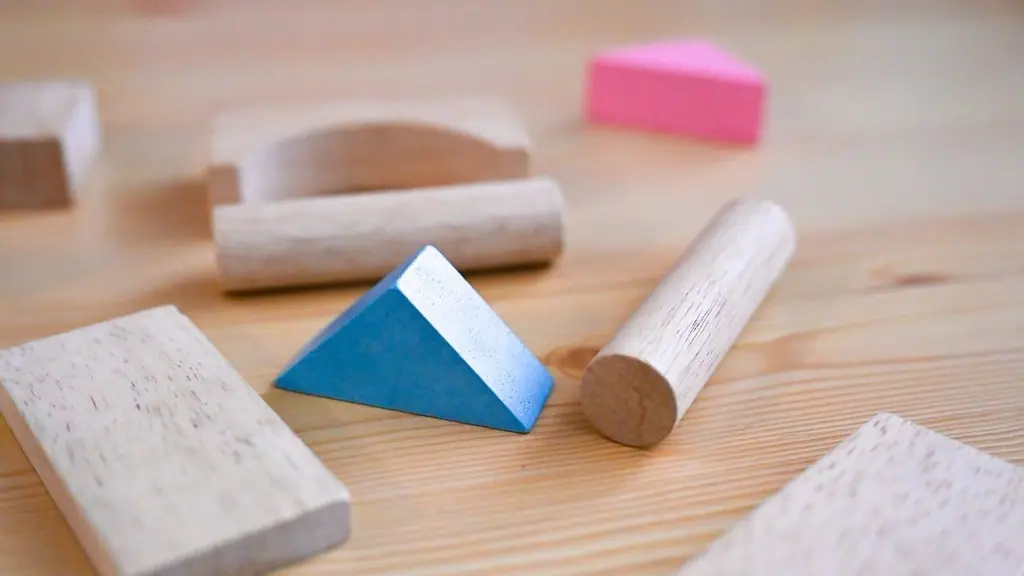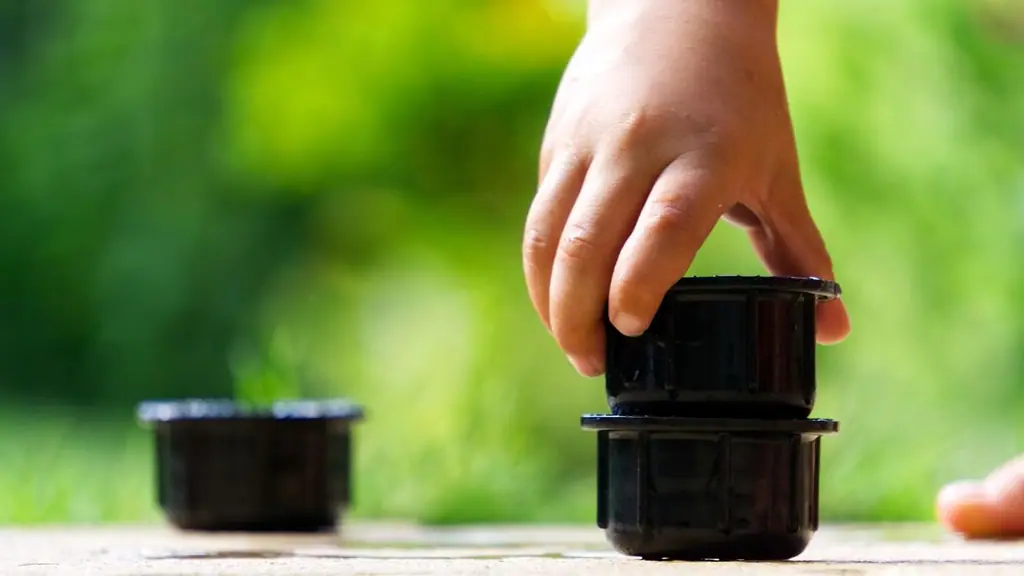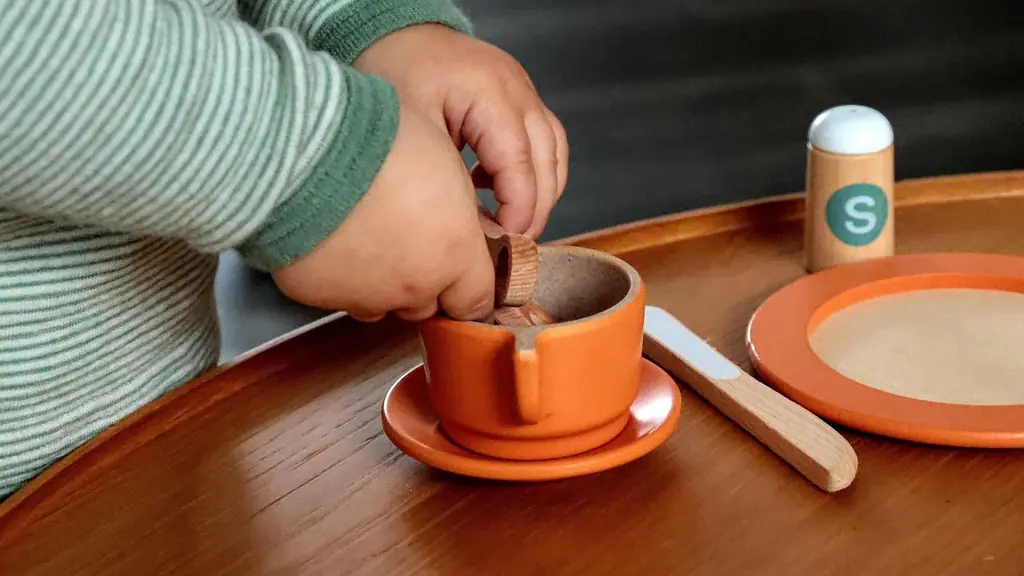
A block becomes a phone. A laundry basket becomes a boat. A three-year-old announces that she is a doctor, the teddy is very sick and you are the worried parent. Pretend play is so ordinary that it is easy to overlook how much is going on in it: a child holding two ideas at once (this is a block, and it is also a phone), following a storyline, and stepping into someone else's shoes.
Popular articles often go further and claim that pretend play "builds" intelligence, creativity or empathy. The research is more interesting, and more modest, than that. Here is what the best-known reviews actually found, what remains uncertain and what that means for a family living room.
What counts as pretend play
Researchers generally mean play in which a child treats one thing as if it were something else: an object (a banana as a phone), a person ("I'm the teacher") or a situation (the rug is lava). It ranges from a toddler briefly feeding a doll to a group of seven-year-olds running a week-long imaginary kingdom with laws and taxes.
It emerges gradually. ZERO TO THREE describes toddlers beginning to pretend at around age 2, acting out familiar routines like feeding or rocking a doll to sleep and letting objects stand in for other things. The CDC's developmental milestones include "uses things to pretend" at 30 months and, by 4 years, "pretends to be something else during play (teacher, superhero, dog)." Milestones describe what most children do by a given age, not a deadline, and children reach them at different times. If you have concerns about your child's development, your pediatrician is the right person to ask.
The big claims, and what a major review found
The most cited examination of the evidence is a 2013 review in Psychological Bulletin by Angeline Lillard of the University of Virginia and colleagues. They tested the common claim that pretend play is crucial to healthy development against two alternatives: that pretend play is one of many routes to the same skills, or that it simply tends to show up alongside other things (supportive adults, rich language, a child's own temperament) that are doing the real work.
Their conclusions, by area, in plain language:
| Area of development | What the 2013 review concluded |
|---|---|
| Language, storytelling, emotion regulation | Research is consistent with pretend play helping, but not strong enough to draw firm conclusions. |
| Executive function and social skills | Evidence leans against pretend play being uniquely crucial, without settling whether it helps alongside other routes. |
| Reasoning | Children reach the same reasoning skills by other routes too, so pretend play is not essential for it. |
| Problem solving | No compelling evidence that pretend play helps, or is even linked. |
| Creativity, intelligence, theory of mind | Results are inconsistent; some well-run studies suggest the surrounding adults and environment matter more than the pretending itself. |
The authors' take-away was that existing evidence does not support strong causal claims about the unique importance of pretend play, and that more and better research is needed. That is not the same as saying pretend play does nothing. It means the confident headlines ran ahead of the data.
What newer work adds
Research has continued. A 2024 meta-analysis in Educational Psychology Review pooled 34 studies of children aged roughly 3 to 8 and found a positive relationship between pretend play and social competence. Two details are worth knowing:
- Studies that measured the quality of pretend play (how complex and sustained it was) found stronger links than studies that simply counted how much children pretended.
- Most of the studies were snapshots in time, so the authors were clear that they could not show that pretend play causes better social skills. It could equally be that socially skilled children are better at sustaining shared make-believe.
In other words, pretend play and social competence clearly travel together. Which one pulls the other is still open.
Why pediatricians still recommend play
None of this has led pediatric experts to downgrade play. In its 2018 clinical report The Power of Play, the American Academy of Pediatrics argues that play with parents and peers, pitched at the right level for the child, helps build social-emotional, thinking, language and self-control skills, and that the shared fun and back-and-forth of playing together strengthens the bond between parent and child. It encourages pediatricians to "prescribe" play at well visits.
The two positions fit together better than they first appear. The AAP report is about play broadly, including the warm, responsive relationships that come with it. The 2013 review asked a narrower question: whether pretending specifically is uniquely responsible for particular skills. A reasonable reading of both is that pretend play is a valuable, natural part of childhood that sits inside a bigger picture of conversation, relationships and varied play, rather than a magic ingredient on its own.
How adults can support pretend play without taking over
If the quality of play and the people around it matter, the practical question is how to join in well. ZERO TO THREE's advice for toddlers is to follow the child's lead and build on their idea, and to model new possibilities, such as showing that a block can be a birthday cake. These habits work for older children too:
- Watch first. Spend a minute working out what the story is before you step in.
- Take a role, not the director's chair. Be the customer, the patient or the dragon. Ask, "What should I do now?"
- Add one twist, not a whole plot. "Oh no, the bridge is broken!" gives children a problem to solve; a ten-step script gives them a part to follow.
- Offer words. Name feelings and actions in the story ("The bear looks nervous about the doctor"), which brings new vocabulary into the game.
- Provide open-ended props. Scarves, boxes, cups and blankets can be anything; a single-purpose costume tends to be one thing.
- Know when to leave. When the children are negotiating the plot happily among themselves, your job is done.
Signs you might be steering too hard: the children keep looking to you for the next line, the story keeps returning to what you find interesting, or play stops when you walk away.
Making room for it at home
You do not need a dedicated play kitchen or a costume collection. Pretend play thrives on time, a little space and a few flexible materials:
- Unhurried time. Longer stretches let stories develop beyond the setup.
- A den or corner. A blanket fort is an instant castle, cave or spaceship; our story-world prompts offer ideas without scripts.
- Flexible props. See our guide to a dress-up box that gets used and to small-world play for tabletop storytelling.
- Playmates of different ages. Older siblings can scaffold complex stories, and younger ones get to join a bigger world.
Safety first
- Props to match the youngest player. No small parts, marbles, balloons, button batteries or small magnets for children under 3 or any child who still mouths objects.
- Nothing around necks. Skip costume cords, drawstrings, long ribbons and ties for young children, and keep play away from window-blind cords.
- Forts stay simple. Low, stable supports, nothing heavy on the roof, one open side for air and cool LED lights only.
- Supervision to suit the age. Toddlers need a grown-up within reach; older children need someone nearby who checks in. See our play safety page for the general principles.
For a broader look at how play connects with planning and self-control, read how play builds executive function, and for the principles behind flexible materials, see open-ended play explained. If your children enjoy story starters, the imaginative play prompt cards are ready to print.
The honest summary: pretend play is not a developmental shortcut, and you do not need to engineer it. It is something most children do naturally, that they enjoy, and that gives adults an easy, warm way to talk, laugh and imagine alongside them. That is reason enough to make room for it.
Sources
- The impact of pretend play on children's development: a review of the evidence, Psychological Bulletin (Lillard et al., 2013), via PubMed
- The Power of Play: A Pediatric Role in Enhancing Development in Young Children, Pediatrics, American Academy of Pediatrics clinical report (2018), via PubMed
- The Value of Pretend Play for Social Competence in Early Childhood: A Meta-analysis, Educational Psychology Review (2024)
- Milestones by 4 Years, Centers for Disease Control and Prevention
- Stages of Play from 24–36 Months: The World of Imagination, ZERO TO THREE