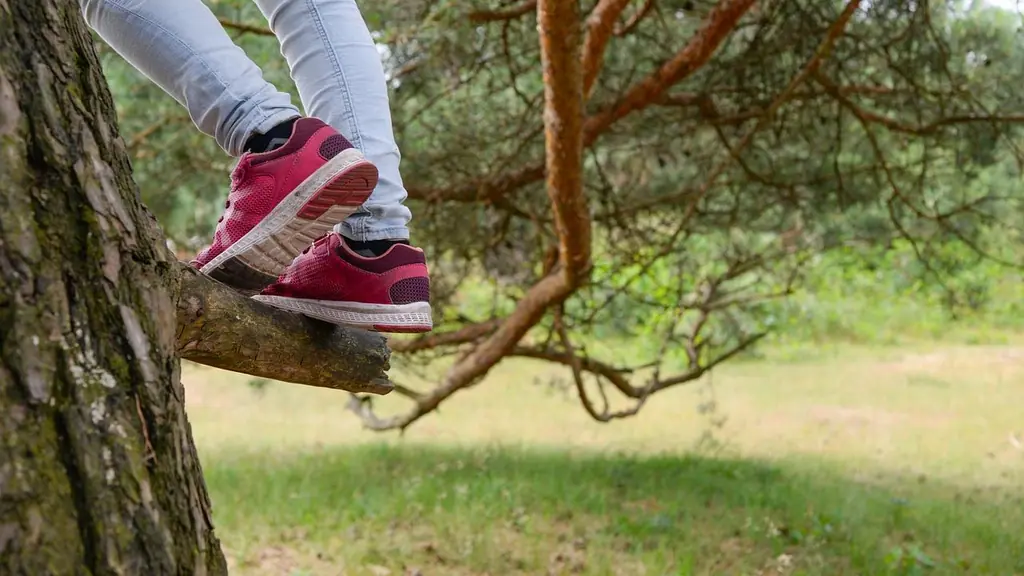
Every adult who has watched a child edge along the top of a low wall knows the feeling: a lurch in the stomach and the words "be careful!" halfway out before anyone has decided whether the wall is actually a problem. Risky play is the name researchers and play organizations give to the thrilling, slightly scary kind of play where a child might get hurt: climbing high, going fast, balancing, wrestling, using real tools, exploring out of sight.
Most of the time, the right response is neither "no" nor "go for it." It is a quick, honest judgment about what could go wrong, how badly and what the child gains. This guide gives you the vocabulary and a few practical checks to make that judgment with confidence.
Risk and hazard are not the same thing
The single most useful idea in this area is the difference between a risk and a hazard.
- A risk is a challenge a child can see, weigh up and choose how to handle. A low branch, a wobbly log, a steep grassy slope: the child can look at it, test it and decide.
- A hazard is something the child cannot reasonably recognize or assess, and that offers no real benefit. A rotten branch that looks solid, a nail sticking out of a plank, a rope that could catch around a neck, broken glass hidden in long grass.
The 2015 systematic review led by Mariana Brussoni uses this distinction. The adult job is to remove hazards while leaving children space to manage risks.
| Situation | Risk (often worth keeping) | Hazard (remove or fix) |
|---|---|---|
| Climbing a tree | Choosing which branch to reach for | Dead or cracked branches; hard ground or rocks below |
| Balancing on a log | Wobble, height off the ground | Protruding nails, rot, slippery algae nobody can see |
| Building with planks | Deciding how high to stack | Splinters, rusty screws, planks too heavy to control |
| Rolling down a hill | Speed, dizziness | A road, fence or ditch at the bottom |
| Playground equipment | Climbing to the top platform | Concrete underneath; drawstrings or helmets catching on equipment |
What the research found
Brussoni and colleagues reviewed studies on the health effects of risky outdoor play, using six categories developed by researcher Ellen Sandseter: play at great heights, at high speed, with dangerous tools, near dangerous elements (such as water or fire), rough-and-tumble play, and play where children can "disappear" or get lost, meaning time out of adult sight.
They found 21 papers representing 18 studies. Overall, the effects of risky outdoor play on health were positive, most consistently for physical activity: environments that supported risky play were generally associated with children being more active and less sedentary. Social health, injuries and aggression were examined in fewer studies, so conclusions there are weaker.
The authors are clear about limits. Most of the evidence was rated low quality, there was only one randomized trial, and no studies at all looked at high speed, dangerous tools or dangerous elements. They call for better research. Still, their conclusion was that the findings support promoting risky outdoor play for healthy child development.
This fits a broader picture from the American Academy of Pediatrics, whose clinical report The Power of Play describes play as a key way children build social-emotional, cognitive, language and self-regulation skills.
Benefit-risk thinking
UK play organizations have developed a practical approach called risk-benefit assessment. The Managing Risk in Play Provision implementation guide, written by David Ball, Tim Gill and Bernard Spiegal for the Play Safety Forum, asks providers to weigh what a play opportunity offers children alongside what could go wrong. As the guide puts it, the goal is balance, which is "not about eliminating risk."
At home, the same thinking boils down to three questions:
- What could happen, realistically? A scraped knee is very different from a fall onto concrete.
- How likely is it, and how bad would it be? High chance of something minor can be fine; low chance of something catastrophic usually is not.
- What does the child get from it? Thrill, confidence, coordination, problem-solving, the joy of doing it themselves.
How to assess height, surfaces and fall zones
You do not need a measuring tape for every tree, but these checks help.
- Height: The higher the climb, the more the landing matters. For younger children, keep self-built structures low; a good rule at home is that a child should be able to climb down without help from anywhere they can climb up.
- Surfaces: The U.S. Consumer Product Safety Commission's playground handbook says concrete, asphalt and other hard surfaces should never be directly under play equipment, and that grass and dirt are not considered protective surfacing on playgrounds because wear reduces their cushioning. In backyards and woods, look for soft, even ground and move rocks and logs out of landing areas.
- Fall zones: Look at the space around and below, not just the climb. CPSC recommends that the use zone around a stand-alone climber extend at least 6 feet in all directions. The principle holds anywhere: nothing hard or sharp in the space where a child would land.
- Clothing and gear: CPSC warns that drawstrings on hoods and mittens on strings can catch on equipment and strangle, and that bicycle helmets can trap a child's head in openings. Take helmets off before climbing.
- Ropes: Remove ropes, dog leashes or cords tied to climbing structures or trees. CPSC notes children can become entangled and strangle.
- Conditions: Wet, icy or windy days change what is reasonable.
Language that helps
"Be careful" is too vague to act on. Try specific prompts that build the child's own judgment:
- "Do you feel steady?" / "Where will you put your foot next?"
- "Is that branch strong enough? How can you check?"
- "What's your plan for getting down?"
- "Look at what's under you."
- "Take your time; I'm here."
- "That's as high as I'm comfortable with today. Can you find another challenge down here?"
Stay close enough to step in, but keep your hands off unless you need them. Lifting children onto things they cannot climb themselves skips the part where they learn whether they are ready.
A quick check before you say yes
- Hazards removed (nails, rot, glass, ropes, hard objects below)?
- Child can get down on their own?
- Landing area soft and clear?
- Clothing free of drawstrings and cords; helmets off?
- Someone appropriate supervising, at the right distance for the child's age?
- Child is choosing this, not being dared or pushed?
Safety first
Risky play is not the same as no supervision. Match how close you stay to the child's age, experience and the setting. Water is the big exception to "let them try": young children need an adult within arm's reach near any water. Never allow ropes, cords or strings near young children's necks, and remove them from trees and climbing structures. Keep heights low for preschoolers and avoid climbing on furniture or forts, which are not built to take weight. See our general safety principles.
What they’re learning
When children choose and manage a challenge, they may practice judging distance and height, planning a route, balancing, recognizing their own fear and limits, and recovering from small mistakes. The research review summarized here links risky outdoor play most clearly with physical activity; evidence for other benefits is promising but still limited.
Putting it into practice
The easiest way to offer manageable risk is through materials children can change themselves. Our guide to loose parts in the backyard shows how crates, planks and tires create challenges you can check, while building a den outdoors adds sticks, tarps and real problem-solving. For the developmental picture, see how play connects to executive function, or look at age-specific ideas for big kids. The International Play Association's work on children's right to play is a useful wider reading list.
Sources
- What is the Relationship between Risky Outdoor Play and Health in Children? A Systematic Review, International Journal of Environmental Research and Public Health (Brussoni et al., 2015)
- Managing Risk in Play Provision: Implementation Guide, Play Safety Forum (hosted by PlayBoard NI)
- Public Playground Safety Handbook, U.S. Consumer Product Safety Commission
- The Power of Play: A Pediatric Role in Enhancing Development in Young Children, Pediatrics (American Academy of Pediatrics, 2018)
- International Play Association, IPA World