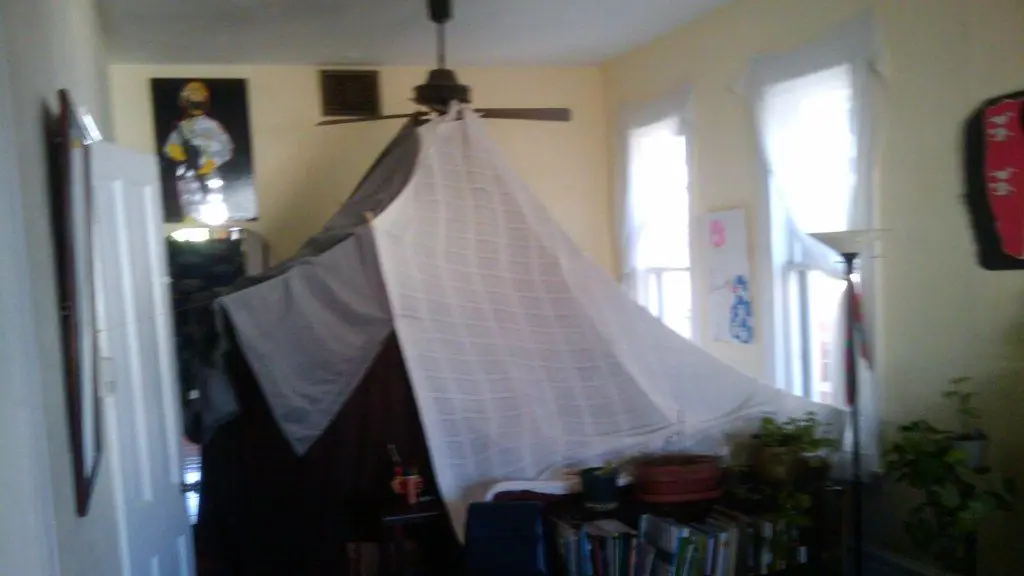
Some family evenings take planning and money. A fort night takes a few sheets, the dining chairs and about two hours, and it tends to be the evening children still bring up months later. Everyone builds together, everyone gets a job, and at the end you are all squeezed into a glowing den with a book and a snack.
The difference between a fort night that works and one that dissolves into squabbles over the best blanket is mostly preparation. If the materials are ready, every child has a role they can actually manage, and the evening has a clear shape, the build becomes the fun part rather than the stressful part. This plan works for families with children anywhere from toddlers to tweens, and it scales from one child and one grown-up to a houseful of cousins.
Why it is worth an evening
The American Academy of Pediatrics has made the case for play in more than one major clinical report. The 2007 report on play and parent-child bonds describes play as an ideal opportunity for parents to engage fully with their children. The 2018 report, "The Power of Play," describes how the shared joy and back-and-forth of play between parents and children help regulate stress and build the safe, stable, nurturing relationships children need. A fort night is shared play with a built-in reason to talk, cooperate and laugh, and nobody needs to be good at anything in particular.
You’ll need
- A "fort bin" packed ahead: 3 to 5 flat sheets or light throws, 15 to 20 clothespins and chip clips
- Sturdy dining chairs, the sofa and floor cushions
- One battery LED lantern, plus LED flashlights for older children
- A stack of picture books or a chapter book to read aloud
- A simple snack suited to your youngest child, on a tray
- Paper and crayons for signs and a "fort name"
- A kitchen timer or phone timer for the tidy-up game
The plan, step by step
- Announce it in advance. Tell children in the morning that tonight is fort night. Anticipation is half the fun, and it gives them time to think about designs.
- Prepare the room. Before the build, clear the space, move breakables and lamps, check that the furniture you plan to use is sturdy, and keep the fort site away from heaters and corded blinds.
- Hand out roles. Give each person a job (see the table below). Roles prevent the "everyone grabs the same sheet" problem and make sure the youngest children feel important.
- Hold a two-minute design meeting. The architect describes the plan, everyone suggests one idea, and you agree on where the door goes.
- Build together. Let children do as much as they safely can. A grown-up places any strong clips and checks that chairs cannot slide.
- Name and decorate it. Make a sign for the door. Hang paper decorations on the outside of the fort.
- Move in. Turn the big lights off and the lantern on. Read a story, share the snack sitting up, tell jokes or play a quiet guessing game.
- Play the tidy-up game. Set a timer and see if the family can "un-build" the fort and put everything back in the bin before it rings.
Roles for every age
| Role | What they do | Best ages |
|---|---|---|
| Architect | Draws or describes the plan, decides on rooms and the door | Big kids (8–12), early school with help |
| Engineer | Clips sheets, fixes sags, checks the roof is taut | Early school (5–8) and up |
| Supplier | Fetches sheets, clips and cushions from the bin as the builders call for them | Preschool (3–5) and up |
| Decorator | Makes the door sign, names the fort, arranges cushions and books inside | Preschool and up |
| Door greeter | Lifts the door flap, invites people in, carries pillows | Toddlers (1–3), with a grown-up beside them |
| Safety inspector | Walks around at the end checking for an open side and nothing on the roof | Big kids, with an adult double-checking |
Grown-ups can take any role, but the most useful adult role is usually "assistant to the architect": present, helpful and not in charge.
Variations by age
- Toddlers (1–3): Keep their part short and physical: carrying cushions, lifting the door flap, crawling in first. A low table tent next to the main fort gives them their own space.
- Preschool (3–5): They love the decorator and supplier jobs and the moment the lights go off. Keep the story short and let them choose the book.
- Early school (5–8): Hand them real building jobs, such as clipping and fixing sags, and let them run a simple pretend game inside, such as a campsite or a ship's cabin.
- Big kids (8–12): Put them in charge of the design, give them a budget of sheets and clips, and let them read the bedtime chapter aloud. For more ambitious builds, see engineering a bigger fort.
Safety first
- Adult supervision throughout, closer for toddlers and preschoolers.
- Nothing heavy on the roof. Sheets and light blankets only, never books, boxes or cushions on top.
- Stable furniture only. Chairs, tables and sofas that cannot slide or tip. Never attach the fort to a bookcase, dresser or TV stand; the CPSC recommends anchoring furniture with drawers, doors and shelves to the wall.
- Cords away from necks. Build away from corded blinds, and keep strings, ribbons, ties and light cords out of reach of young children.
- Cool LED lights only. No candles, incandescent bulbs or plug-in lamps inside, and keep lights off bedding.
- Air and exits. Leave one side open, keep faces uncovered, and keep the fort away from heaters. If little ones fall asleep, move them to their own bed: forts are not for sleeping babies.
- Snacks and small things. Choose foods suited to your youngest child's age, have everyone sit up while eating, and keep small toys, game pieces and battery lights with loose compartments away from children under 3.
See our play safety page for the full principles.
What they’re learning
A family build gives children practice in cooperating, negotiating, taking turns and sticking with a shared plan. HealthyChildren.org notes that play with family members supports children's emotional skills and relationships, and suggests narrating and asking questions during play to build conversation and vocabulary. ZERO TO THREE recommends following a child's lead in pretend play and asking open questions such as "What if...?" That works just as well inside a fort at bedtime.
Grown-up tip
Pack the fort bin before you announce fort night, and keep the snack simple and low-crumb. If energy runs high, switch to the "quiet fort" rule as soon as the lantern goes on: whispers only, which children find surprisingly thrilling.
Make it a tradition
Many families find one fort night leads to the next. Rotate the architect role so each child gets a turn, keep a photo of each fort on the fridge, and try a new shape every time: our guide to building a blanket fort that stands up and stays safe covers the basics, and weekend building challenges offer more ways to build together as a family.
Sources
- The Importance of Play in Promoting Healthy Child Development and Maintaining Strong Parent-Child Bonds, Pediatrics, American Academy of Pediatrics clinical report (Ginsburg, 2007), via PubMed
- The Power of Play: A Pediatric Role in Enhancing Development in Young Children, Pediatrics, American Academy of Pediatrics clinical report (2018), via PubMed
- Indoor Play Ideas: Fun Ways for Families to Connect, HealthyChildren.org (American Academy of Pediatrics)
- The Pretenders, ZERO TO THREE
- Anchor It!, U.S. Consumer Product Safety Commission