Watch a two-year-old try to push a square block through a round hole. They push, twist, bang it, try another hole, look at you, and try again. That stubborn, trial-and-error effort is problem-solving in its earliest form, and the same pattern shows up years later when a ten-year-old's fort roof keeps sagging and they work out that it needs a brace in the middle.
Problem-solving is not a single skill, and it is not something a toy can install. It grows from lots of small, slightly-too-hard challenges, plenty of time to struggle with them, and a grown-up who helps just enough. Below are activities that offer those challenges at each age, and a set of prompts that keep the thinking with the child.
What sits underneath problem-solving
Researchers at the Center on the Developing Child at Harvard University describe a set of skills called executive function that underpin much of what we call problem-solving. They rely on three types of brain function: working memory (holding information in mind and using it), mental flexibility (switching approaches when something does not work) and self-control (pausing instead of acting on the first impulse). The Center compares them to an airport's air traffic control system. Children are not born with these skills, only the potential to develop them, and they keep developing into early adulthood.
The American Academy of Pediatrics' report on play describes play with parents and peers as an opportunity to build the social-emotional, cognitive, language and self-regulation skills that support executive function. In a review of programs for children aged 4 to 12, Adele Diamond and Kathleen Lee found that the approaches that improved executive function had something in common: repeated practice and gradually increasing challenge. That is a good guide for home, too. Keep the challenge just beyond what is easy, and nudge it up as your child grows.
Our companion piece on how play builds executive function goes deeper into the research and its limits.
Activities by age
Toddlers (1–3)
- Shape sorters and posting boxes. Matching a shape to a hole is a physical puzzle. Start with one or two shapes; add more as they succeed.
- Hide-and-find under cups. Hide a toy under one of two or three cups. For older toddlers, move the cups after hiding it.
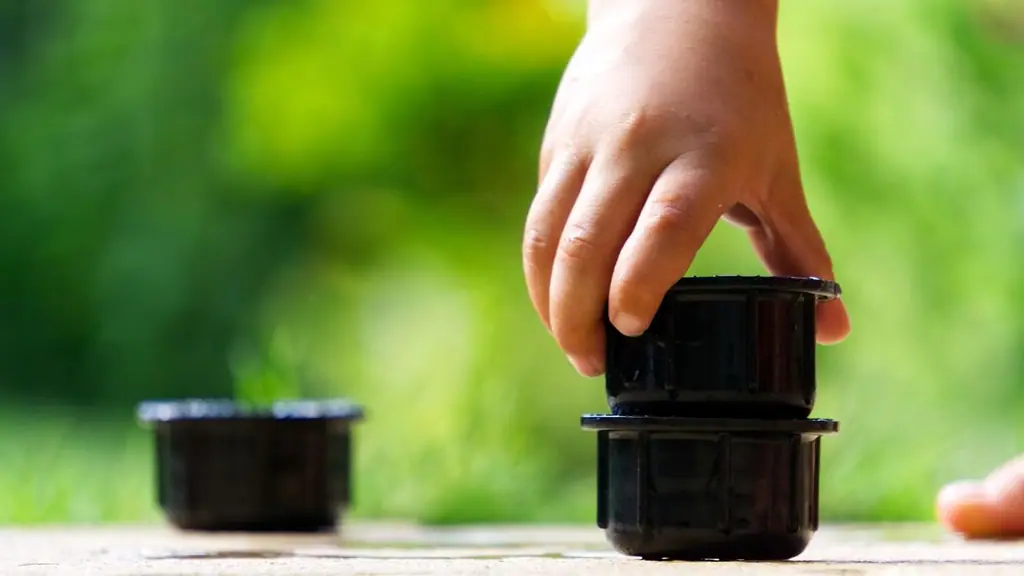
- Stacking and nesting cups. Which one goes inside which? Towers fall, and rebuilding is the point.
- Simple sorting. Put big things in one basket and small in another, then try a silly reverse version: small things in the big basket.
- First puzzles. Chunky knob puzzles with three to five pieces.
Preschool (3–5)
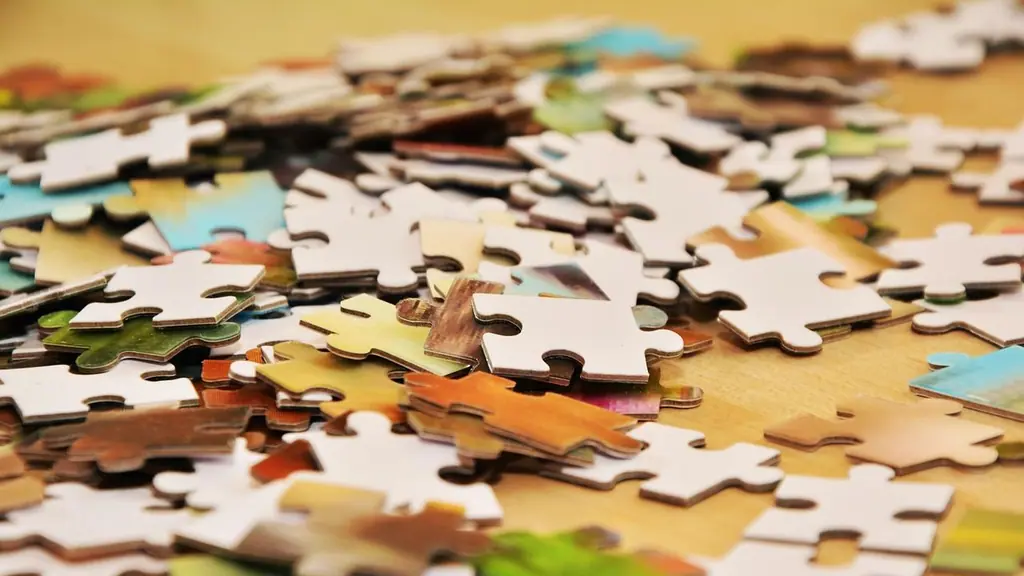
- Jigsaw puzzles with gradually more pieces. Talk about edges, colors and shapes.
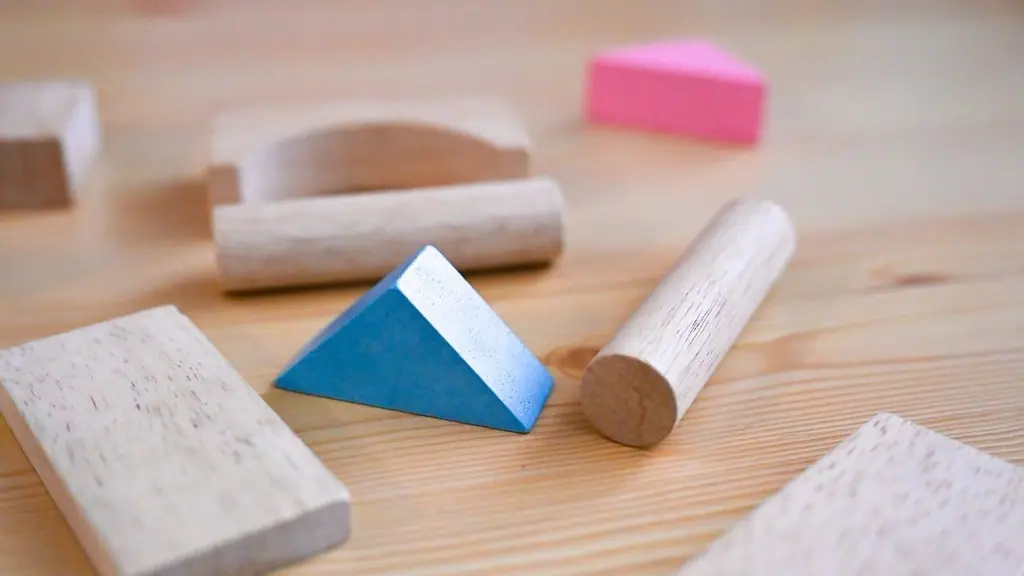
- Block challenges. "Can you build a wall the toy dog can't see over?" "Can you make a bridge for this car?"
- Sorting by changing rules. Sort buttons or blocks by color, then switch to sorting by size. Switching rules asks children to drop the old rule and hold the new one.
- Play plans. Before pretend play or building, ask your child to draw or say what they will make. Afterward, compare the plan with what happened.
- Simple fort problems. "The blanket keeps sliding off the chair. What could hold it?" Offer clips, pillows and pool noodles and let them experiment.
Early school (5–8)
- Fort design problems. Give a goal ("a fort with two rooms and a window") and let children choose materials, sketch a plan and test it. Our guide to building a blanket fort that stands up and stays safe gives the basics.
- Paper engineering. Fold paper into a bridge that holds coins or toy cars. The paper bridge challenge walks through it.
- Logic and guessing games. Twenty questions, "guess my rule" with a set of blocks, mazes, simple sequencing puzzles.
- Strategy board and card games. Checkers, memory-matching card games and games that require planning a few moves ahead.
- Mission cards. Our printable construction challenge cards give a new problem each time.
Big kids (8–12)
- Bigger builds with constraints. A fort that must cover a set area with only four chairs, or a cardboard tower that must hold a book. Limits force creative solutions.
- Strategy games. Chess, card games that require tracking what others have played, and multi-step puzzle books.
- Real-world problems. Planning a family picnic within a budget, redesigning a cluttered shelf, mapping a route for a walk.
- Design-test-improve cycles. Build, test, write down what failed, change one thing, test again.
Prompts that support thinking without solving
The hardest part for adults is not jumping in. These prompts keep the child in charge of the solution.
| Instead of… | Try… |
|---|---|
| "Put that piece over here." | "What do you notice about the edges of that piece?" |
| "That won't work." | "What do you think will happen? Let's see." |
| "Here, let me do it." | "Which part is tricky? What have you tried so far?" |
| "Use the clips." | "What could hold the blanket in place?" |
| "Good job!" | "You kept trying different ways until it stood up. How did you figure it out?" |
| "Let's start over." | "What's one thing you could change?" |
The Center on the Developing Child describes this kind of help as scaffolding: helping children with a hard task at first, then gradually stepping back so they can manage it themselves and learn from their mistakes.
Safety first
- Small parts. Puzzle pieces, game pieces, beads and small blocks are choking hazards for children under 3 and for any child who still mouths objects. Keep older children's games in closed boxes, stored out of a toddler's reach.
- Forts. Keep them low, built against sturdy furniture that cannot slide or tip, with nothing heavy on the roof. Leave an open side for air, keep cords, ropes and window-blind cords away from young children's necks, and use cool LED lights only.
- Building challenges. Towers stay below a young child's chest height; nobody climbs on builds.
- Tools. Craft knives and hot glue are for adults only.
- Supervision that matches the child's age and the activity. More in our safety principles.
What they’re learning
These activities give children chances to practice holding a goal in mind, trying different strategies, resisting the urge to give up or grab the first answer, and checking whether a plan worked. Harvard's Center on the Developing Child notes that the activities it suggests reflect expert judgment, and that not all have been proven effective in studies; practice, though, leads to improvement. The CDC's developmental milestones describe what most children do by a given age, and children reach them at different times. If you have concerns about your child's development, talk with their doctor.
Grown-up tip
When frustration rises, shrink the problem rather than solving it: hand over just the edge pieces, remove half the blocks, or ask "What's the very next step?" A smaller win keeps a child in the game.
Where to go next
Pick one activity from your child's age band and repeat it over a few weeks, nudging the challenge up each time. Children often enjoy seeing how much harder a puzzle they can now manage than they could a month ago, and that sense of progress is part of what keeps them trying.
Sources
- InBrief: Executive Function, Center on the Developing Child, Harvard University
- Enhancing and Practicing Executive Function Skills with Children from Infancy to Adolescence, Center on the Developing Child, Harvard University
- Interventions Shown to Aid Executive Function Development in Children 4 to 12 Years Old, Science
- The Power of Play: A Pediatric Role in Enhancing Development in Young Children, Pediatrics (American Academy of Pediatrics)
- CDC's Developmental Milestones, Centers for Disease Control and Prevention