It is too cold to go out, too early for dinner and too late to start anything ambitious. This is the moment for the kitchen table, a stack of paper cups, a box of straws and a roll of tape. Nothing here needs a trip to the store, and everything packs away into a single shoebox when the table is needed for food.
The four projects below start simple and get harder: a paper-cup tower, a straw-and-tape frame, a paper chain and a card house. Each has a basic version that preschoolers can manage with help and a challenge version for children in the early school years. They work alone or as a run of challenges across a long afternoon, and each comes with prompts that turn building into a game.
Expect collapses. They are part of the fun, and the "why did it fall?" conversation is where much of the thinking happens.
You’ll need
- 20–50 paper cups (the plain, cheap kind; recycled ones work if they are clean and dry)
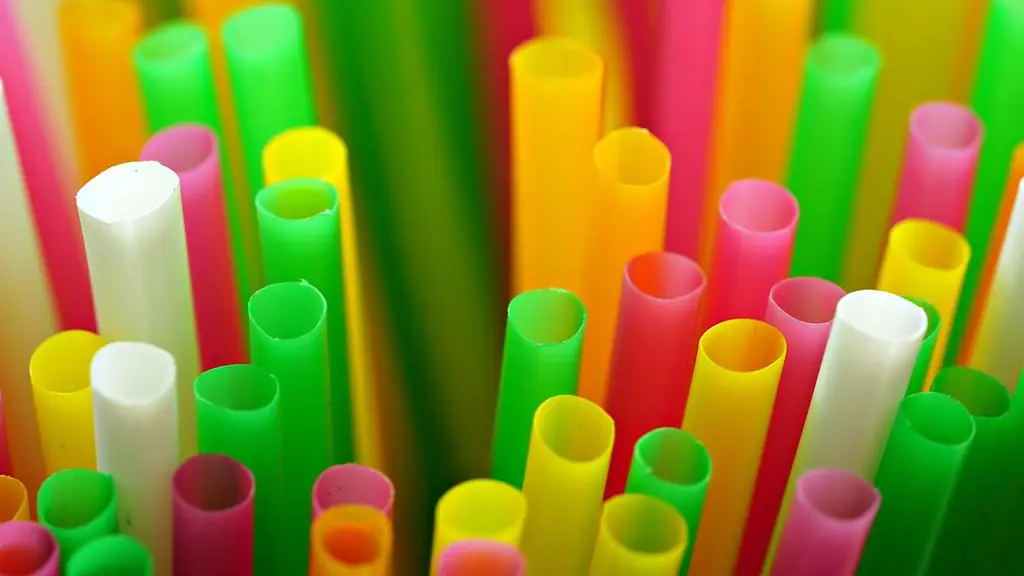
- A box of drinking straws, paper or plastic
- Masking tape or painter's tape (easier for small hands than clear tape)
- Paper: printer paper, construction paper, old magazine pages
- Index cards or a deck of old playing cards
- Child-safe scissors
- A glue stick
- Optional: pipe cleaners, paper clips (older children only), modeling clay or playdough as connectors, a ruler or tape measure
- A small soft toy or a few coins (older children only) to test strength
Project 1: Paper-cup towers
- Start with a row of cups upside down on the table, then add a second row on top, centered between the cups below.
- Keep going to build a pyramid. Count the cups in each row out loud.
- Try a different design: a single tall column, cups alternating up and down, or a ring with a paper "floor" between each level.
- Challenge: who can build the tallest tower that stands on its own for ten seconds?
Prompts: "What happens if you put a sheet of paper between each layer?" "Can you build a tower tall enough for this soft toy to sit on top?" "How many cups make the strongest base?"
Project 2: Straw-and-tape frames
- Tape three straws together at the ends to make a triangle. Tape four together to make a square.
- Press gently on each corner. Which shape holds its form and which folds?
- Join triangles into a pyramid by taping straws upward from each corner to a single top point.
- Build a cube from squares, then add diagonal straws across the faces and see how it changes.
- Challenge: build the tallest free-standing straw frame, or a bridge between two books that holds a small toy.
Prompts: "Why do you think the triangle didn't wobble?" "Can you make a house frame big enough for a toy to live inside?" Modeling clay or playdough balls make easy connectors for younger builders who find taping fiddly.
Project 3: Paper chains with a purpose
- Cut paper into strips about 1 inch (2.5 cm) wide and 8 inches (20 cm) long. A grown-up can cut for younger children.
- Loop one strip and tape or glue the ends. Thread the next strip through and close it.
- Keep going. Make patterns: red, blue, red, blue, or two greens then a yellow.
- Challenge: whose chain is longest in five minutes? Can a chain hold a light object if you hang it from a doorknob?
Prompts: "How many links make a chain as long as you are tall?" "Can you make a pattern that repeats three times?" Longer chains can decorate a fort or count down days to an event, but hang them high and out of reach of younger children.
Project 4: Card houses
- Lean two cards against each other to make a tent shape. This is the hardest part, so be patient.
- Make a second tent beside the first, then lay a flat card across the tops as a roof.
- Build a second story of tents on top of the roof.
- For an easier version, cut small slits in the cards so they slot together, or tape the base pieces to the table.
- Challenge: how many stories can you build before it falls?
Prompts: "What makes the cards slide?" "Does it work better on the tablecloth or the bare table?" Card houses need steady hands, so they suit children who have had practice with the easier projects first.
Variations by age
| Age | What works | How to help |
|---|---|---|
| Preschool (3–5) | Cup towers, simple straw shapes with clay connectors, short paper chains with pre-cut strips, slotted card shapes. Short sessions with lots of freedom. | Pre-cut strips and tape pieces stuck to the table edge, ready to grab. Narrate what they are doing: "You put the big ones on the bottom." |
| Early school (5–8) | All four projects, timed challenges, measuring height with a tape measure, drawing a plan before building, testing strength with small weights. | Ask open questions rather than giving answers. Let them test and fail. Suggest a sketch first, then a rebuild. |
If a toddler is at the table, give them a stack of cups to knock down and rebuild while the older children work, and keep small items such as paper clips and coins well out of reach.
Safety first
- Scissors by age. Preschoolers use child-safe scissors with a grown-up beside them; children in the early school years can cut independently with blunt-tipped scissors once they have been shown how.
- No hot glue for young children. Hot glue guns and craft knives are grown-up-only tools. Masking tape, glue sticks and clay do the job well here.
- Small parts. The CPSC's small-parts rules exist because small objects are a choking hazard for children under 3. Paper clips, coins, beads, bottle caps and small pieces of clay should stay off the table when toddlers or children who mouth objects are nearby.
- Straws and chains. No running with straws in mouths, and paper chains are hung up high, never looped around anyone's neck.
- Tidy as you go. Keep a small bowl for loose bits and sweep up afterward.
Our safety page covers the general principles.
What they’re learning
What they're learning
- Shape and structure. Penn State Extension describes building structures as supporting children's science inquiry, language, mathematics and social skills, as children plan, test and talk about ideas like balance and symmetry.
- Spatial thinking. A study of 3-year-olds published in Child Development found that children's skill at assembling interlocking block constructions was linked to their early math performance. The study shows an association, not that building causes better math, but it is a good reason to make room for construction play.
- Learning through play. The American Academy of Pediatrics' report The Power of Play describes playful learning as supporting cognitive, language and self-regulation skills, and building alongside a grown-up adds the shared enjoyment the report highlights.
Grown-up tip
Grown-up tip: Keep a "build box" in a cupboard: a sleeve of cups, a bag of straws, a roll of tape and some index cards. Add the challenge prompts on a slip of paper so anyone can start without searching for ideas.
Take it further
When the cups and straws have been mastered, try the paper bridge challenge for a deeper look at structures. For more building ideas sorted by age, see STEM building challenges, and if your children enjoy making things from recycled materials, our guide to running a junk modeling station is the natural next step. Print a set of construction challenge cards and keep them in the build box for the next cold afternoon.
Sources
- Creating structures: Common and uncommon ideas, Penn State Extension, Better Kid Care
- Deconstructing building blocks: preschoolers' spatial assembly performance relates to early mathematical skills, Child Development (Verdine et al.), via PubMed Central
- The Power of Play: A Pediatric Role in Enhancing Development in Young Children, Pediatrics, American Academy of Pediatrics clinical report (2018), via PubMed
- Small Parts Ban and Choking Hazard Labeling, U.S. Consumer Product Safety Commission