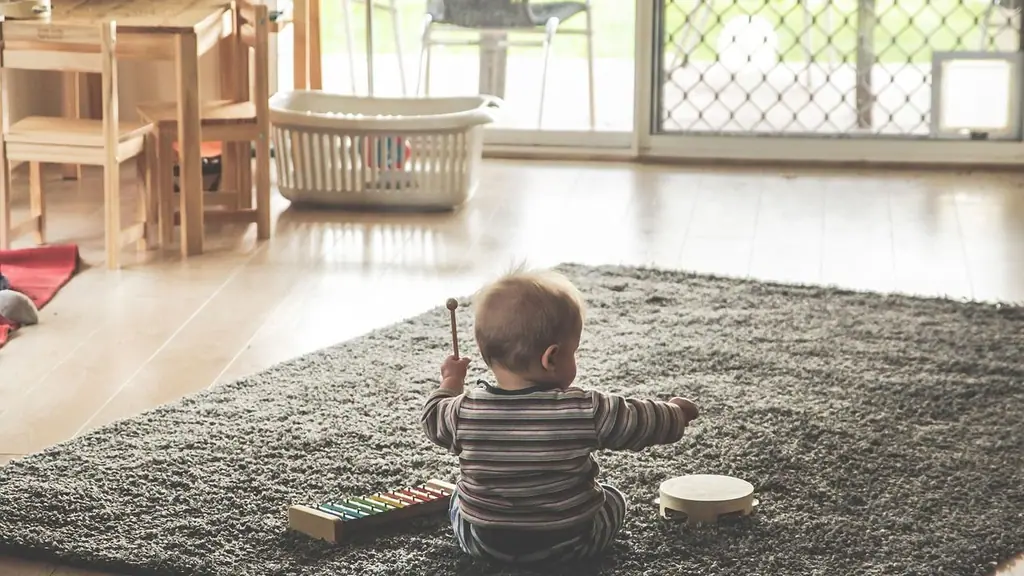
Living small with active children means doing a kind of daily arithmetic: one living room, one hallway, a downstairs neighbor who works from home, and a four-year-old who needs to run. It can feel as if big play requires a big house. It does not. It requires flexible stuff, a little planning and a few rules that keep the peace with the people next door.
This guide collects space-smart ideas that work in apartments, condos and small houses: forts that pack flat, movement games that need no running room, quieter ways to get the wiggles out, storage that climbs the walls instead of covering the floor, and how to make use of shared spaces. Because small homes put children closer to windows and tall furniture, the safety section matters more than usual.
The small-space play kit
You’ll need
- A fitted sheet, a flat sheet and a handful of clothespins or large clips (the whole fort kit fits in one bag)
- A folding play mat or a thick rug for floor games and soft landings
- Painter's tape for roads, hopscotch, balance lines and targets
- Soft balls, bean bags and balloons for older children only
- Empty plastic bottles for hallway bowling
- A few collapsible baskets or fabric bins
- Over-the-door pocket organizers or wall-mounted shelves, anchored
- A small speaker or music player for dance breaks
Set up a fold-away play system
- Choose a "yes" zone. Pick one area, often the living room rug, where active play is welcome and the floor is clear and soft. Everything else in the home can be calmer.
- Make everything packable. Favor play things that fold, stack or roll: a sheet instead of a play tent, a mat instead of a ball pit, bins instead of a toy chest.
- Store vertically. Use wall-mounted shelves, labeled bins on high shelves for things that need a grown-up, and over-the-door organizers for small items. Anchor any freestanding storage to the wall.
- Rotate instead of adding. Keep a few toys out and the rest in a closet bin. Swap every couple of weeks. Our toy rotation guide explains how.
- Have a five-minute reset. Agree on a song or a timer that signals pack-up time so the living room becomes a living room again before dinner.
Fort and den ideas that pack flat
- The sofa-and-sheet lean-to. Tuck one edge of a sheet into the back cushions of the sofa, stretch it over two dining chairs and clip it. Ten minutes to build, two minutes to pack away. More designs in five sofa-cushion forts.
- Under-the-table den. A fitted sheet stretched over a small table makes a snug cave with almost no footprint.
- The doorway curtain. A sheet clipped across a doorway with a tension rod turns a closet or bedroom corner into a hideout.
- A reading nook. A cushion, a soft blanket and a low basket of books in a closet with the door removed or held open. See how to make a DIY reading nook.
Active play without running room
| Idea | Ages | Space needed | Noise level |
|---|---|---|---|
| Hallway bowling with plastic bottles and a soft ball | Toddlers and up | A hallway | Low to medium |
| Tape hopscotch or a tape balance line | Preschool and up | About 6 feet (1.8 m) of floor | Low |
| "Floor is lava" with cushions | Preschool and up | A rug | Medium |
| Animal moves (bear crawl, crab walk, frog jumps) | Toddlers and up | A rug | Medium |
| Freeze dance | All ages | A clear spot | Medium to high |
| Yoga-style poses with animal names | All ages | A mat | Low |
| Balloon volleyball over a string of tape on the floor | Early school and up | A clear room | Low |
| Sock "snowball" target toss | All ages | A wall and a basket | Low |
| Mini obstacle course | Toddlers to early school | A loop through two rooms | Medium |
The CDC says children aged 3 to 5 should be active throughout the day, and children 6 to 17 need 60 minutes or more of moderate-to-vigorous activity daily. Short bursts spread across the day all count, which suits small spaces well: ten minutes of freeze dance before dinner is as useful as a long session.
Keeping the peace with neighbors
- Soften the floor. Rugs, play mats and folded blankets absorb thumps from jumping and dropped toys.
- Choose low-impact games. Crawling, balancing, animal walks and stretching are quieter than jumping and running.
- Mind the hours. Save the loudest games for the middle of the day, and switch to calmer play in the early morning and evening.
- Talk to your neighbors. A friendly word about when the children are most active often goes a long way.
- Socks off, slippers on. Soft-soled slippers are quieter than shoes and grip better than socks.
Using shared and outdoor spaces
Small homes make shared spaces more valuable. Courtyards, building playrooms, wide entrance halls (where allowed), nearby parks and even a quiet sidewalk can become part of a child's play territory. Play England, a national charity for children's play, describes play happening in streets, parks and playgrounds as well as indoors. A daily walk to a nearby green space, even a small one, gives children room to run that no apartment can.
Check your building's rules first, keep children supervised in shared areas, and treat stairwells, elevators, parking areas and laundry rooms as off-limits for play.
Variations by age
- Toddlers (1–3): Keep it simple and floor-based: crawling through a sheet tunnel, rolling balls down the hallway, pushing a laundry basket of toys. Large, soft pieces only, and a grown-up within reach.
- Preschool (3–5): Add rules and roles: lava games, freeze dance, tape roads for cars, a sheet fort that becomes a story world.
- Early school (5–8): Children can set up their own mini courses, play hallway bowling with scorekeeping, and help design storage so they can find and put away their own things.
- Big kids (8–12): Give them projects with a footprint you can live with: a fold-down desk for building, a "build bin" for ongoing cardboard projects, choreographing dance routines, or designing a fitness circuit that fits in one room.
Safety first
- Anchor furniture. The CPSC's Anchor It! campaign advises anchoring furniture with drawers, doors and shelves, and TVs, to the wall to prevent tip-overs. In apartments, ask your landlord or building manager about drilling if needed.
- Window safety. The American Academy of Pediatrics notes that a window screen is not strong enough to prevent a fall. It recommends opening windows from the top where possible, installing operable window guards that only an adult or older child can open when windows open from the bottom, and never placing chairs, sofas or anything climbable in front of a window.
- Blind cords. The AAP recommends cordless window coverings where possible, and keeping any cords taut and out of reach.
- Forts stay low and open. Stable furniture, nothing heavy on top, breathable fabrics, an open side and cool LED lights only.
- No climbing on storage. Vertical storage saves floor space but is never a ladder.
- Small parts and balloons. Keep balloons, small parts, magnets and button batteries away from under-3s and anyone who mouths objects.
- Supervision in shared spaces. A grown-up stays with children in courtyards, building playrooms and on the street.
See our safety page for the general principles.
What they’re learning
What they're learning
- Daily movement. CDC and WHO guidance both emphasize regular physical activity for young children, and WHO advises that young children sit less and play more. Short bursts of active play add up in a small home.
- Problem solving with limits. Designing a game that fits a hallway, or a fort that packs away, is a practical design challenge.
- Freely chosen play. Play England describes play as freely chosen and self-directed; a small home can still offer that when children have a clear zone and flexible materials.
Grown-up tip
Grown-up tip: Keep a "play bag" on a door hook with a sheet, clips, tape and a soft ball. When energy spikes, you can set up a fort or a game in two minutes instead of digging through a closet.
Next steps
Small spaces reward smart planning. For a corner that adapts as children grow, see designing a play corner that grows with your child. And when you need a full afternoon plan, our list of rainy-day activities by age is built around what most homes already have.
Sources
- Anchor It!, U.S. Consumer Product Safety Commission
- Home Safety: Tips for Families With Young Children, American Academy of Pediatrics, HealthyChildren.org
- Child Activity: An Overview, Centers for Disease Control and Prevention
- To grow up healthy, children need to sit less and play more, World Health Organization
- Play England, Play England