The play corner you set up for a one-year-old will be outgrown faster than the clothes in the closet. One season it's a rug with a basket of blocks; a couple of years later the same child wants a table for marathon building sessions, and before long a desk for projects that can't be tidied away every night. Rebuilding from scratch at each stage is expensive and exhausting.
The alternative is to design the corner as a frame that stays put while the contents change. A few well-chosen, anchored pieces of furniture, some flexible storage and a habit of rotating what's on offer can carry a single space from toddler floor play to tween workbench. Here's how to plan it.
Start with a frame that lasts
The pieces that do the heavy lifting across all ages are surprisingly few:
- A low, open shelf. Wide and sturdy, roughly hip height to an adult. Toddlers reach the bottom shelves, older children use all of it. Open shelves let children see and choose for themselves, which is exactly what a play corner is for.
- Baskets or bins that fit the shelf. Use the same size throughout so they can swap between shelves as needs change.
- A washable rug. It defines the zone, softens falls and gives building a stable surface.
- A table that adjusts or can be replaced cheaply. A child-height table first, a taller worktable later. Some tables have adjustable legs; otherwise, plan to swap this one piece.
- Wall space. A strip of corkboard or a picture rail at child height becomes a gallery, a plan board or a display for finished models.
Anchor every one of the tall or heavy pieces from day one. It's easier to do before the corner fills up.
How the corner changes by age
| Age band | Main zone | Shelf contents | Wall and extras |
|---|---|---|---|
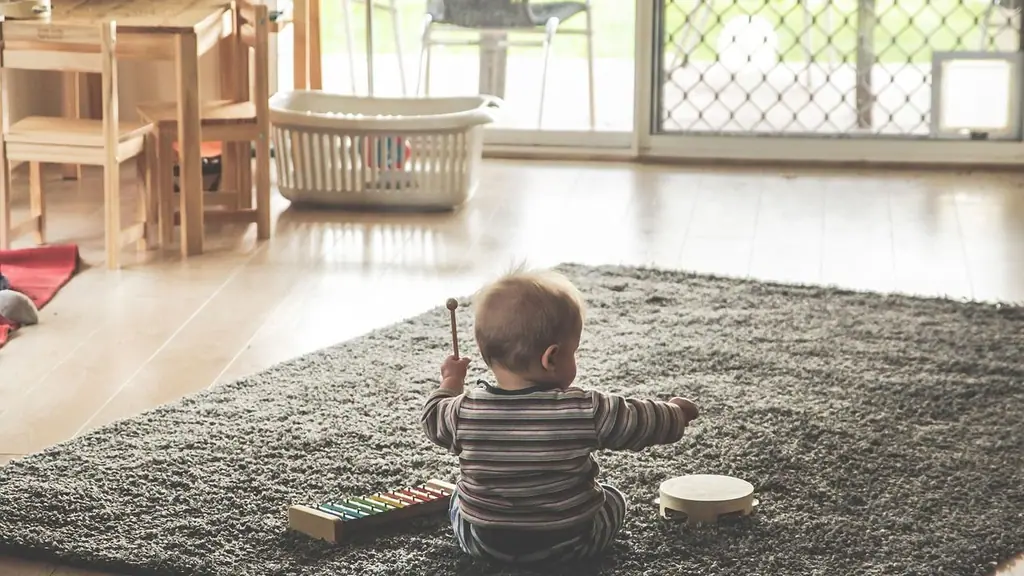
| Toddlers (1–3) | Floor play on the rug | A few baskets: large blocks, board books, push-and-pull toys, nesting cups, a soft doll or animal | Pictures at their eye level, outlet covers, nothing to climb |
| Preschool (3–5) | Rug plus a low building table | Blocks, toy animals and people, dress-up box, art basket with crayons and play dough, puzzles | Picture labels on bins, a display spot for creations |
| Early school (5–8) | Building table becomes a project station | Construction sets, small-world bins, cardboard and tape, games, early readers | Plan board, a shelf for works in progress |
| Big kids (8–12) | Desk or worktable for longer projects | Craft and model supplies, chapter books, board games, a lidded box for ongoing builds | Pegboard for tools and supplies, a reading spot nearby |
These bands are a loose guide, not a schedule. The CDC describes developmental milestones as skills children reach in how they play, learn, speak, act and move, and every child gets there on their own path. Let your child's interests and abilities, rather than their birthday, decide when the corner shifts.
Setting it up step by step
- Pick the location. Choose a corner away from windows with corded blinds, heaters, radiators and the main walkway. Natural light is a bonus; a spot within sight of the kitchen or living area helps with supervision.
- Anchor the furniture. Attach shelves and any dresser or cabinet to the wall with anti-tip anchors before loading them. Put heavier items on the lowest shelves.
- Lay the rug. Use a non-slip underlay on hard floors and line the rug up with the shelf so the zone feels defined.
- Fill only half the shelf. Put out a handful of baskets, each with one kind of toy. Leave gaps. Empty space makes choices easier to see and tidying easier to do.
- Label with pictures. Tape a photo or drawing of the contents to each basket, with the word underneath. Pre-readers can put things back without help, and early readers get a word-recognition bonus.
- Store the rest out of sight. Keep extra toys in lidded boxes in a closet. Every week or two, swap a few baskets. Zero to Three suggests rotating toys to keep the environment interesting.
- Review every few months. Notice what's ignored and what's used every day. Retire baby toys, add challenges, raise the table, and ask your child what they'd like the corner to do next.
Making rotation easy
Rotation is what keeps a small corner feeling fresh without buying more. Our full guide to toy rotation goes into detail, but the basics are simple:
- Keep toys in themed sets (vehicles, animals, building, pretend kitchen) so a whole set swaps in at once.
- Leave favorites out; rotate the rest.
- Bring back a forgotten set after a few weeks and watch it get rediscovered.
- Involve older children in choosing what goes out and what goes away.
If you're short on space, big play in a small apartment has ideas for fold-away tables and vertical storage.
Safety first
- Anchor it. The U.S. Consumer Product Safety Commission's Anchor It! campaign advises anchoring all furniture with drawers, doors and shelves to the wall. The American Academy of Pediatrics adds that heavier items belong on low shelves and toys shouldn't sit on top of tall furniture, where they tempt children to climb.
- No TVs on dressers or shelves in a play area; the AAP advises against placing a TV on top of a dresser.
- Outlets and cords. For toddlers, put safety plugs in unused outlets as the AAP recommends, and keep lamp and charger cords out of reach. Keep the corner well away from window blind and curtain cords.
- Age-appropriate items only. When older siblings share the space, store small parts, magnets, button batteries, marbles and balloons on high shelves or in lidded boxes. Toddlers explore with their mouths.
- Soft edges and clear floors. Choose rounded table corners or edge guards, and keep the walkway clear of trip hazards.
- Tools and supplies. Craft knives and hot glue stay with adults; offer non-toxic, age-appropriate art supplies.
See our safety principles for more.
What they’re learning
What they're learning
A play corner that children can manage themselves supports independence: choosing an activity, finishing it and putting it back. NAEYC, the national association for early-childhood educators, describes play as essential for children from birth through age 8 and as a foundation for self-regulation, language and thinking skills. Low, labeled shelves turn tidying into sorting and matching, and a space that changes with them lets children take on bigger, longer projects as their planning and patience grow.
Grown-up tip
Grown-up tip
Take a photo of the corner set up "the way it lives." Print it and stick it near the shelf. When it's tidy-up time, children can match the room to the picture, which is far easier than following "put everything away."
The long view
A well-planned corner will see a toddler's first block tower, a preschooler's café, an early reader's cardboard city and a tween's model workshop, often with the same shelf and rug. Plan for change, anchor what matters and let the contents follow your child. For more ideas, explore the playroom organization topic or turn part of the corner into a DIY reading nook.
Sources
- Play, National Association for the Education of Young Children (NAEYC)
- Anchor It!, U.S. Consumer Product Safety Commission
- Home Safety: Tips for Families With Young Children, American Academy of Pediatrics (HealthyChildren.org)
- Preventing Furniture and TV Tip-Overs, American Academy of Pediatrics (HealthyChildren.org)
- CDC's Developmental Milestones, Centers for Disease Control and Prevention
- Tips on Nurturing Your Child's Curiosity, Zero to Three