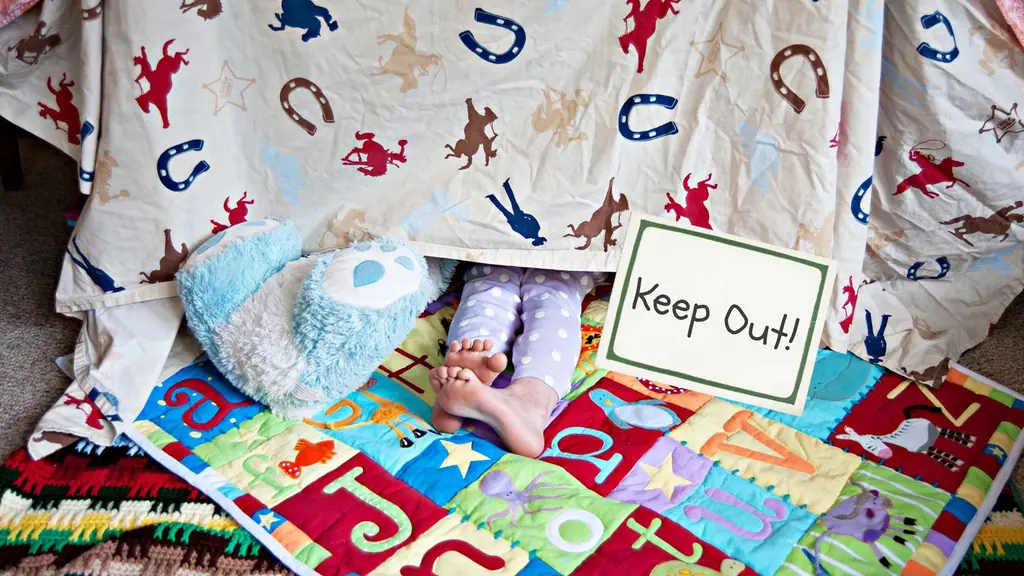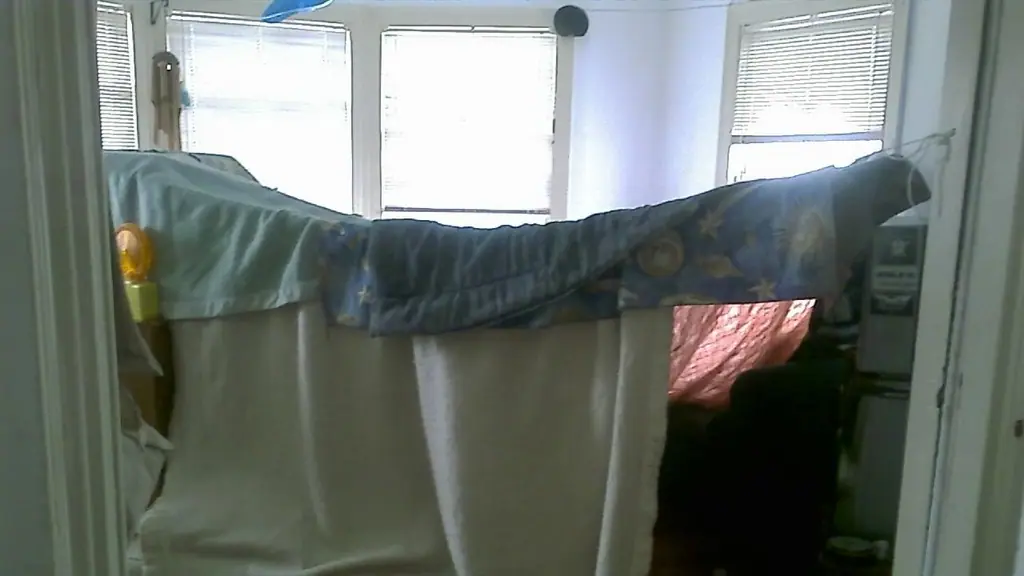
Sheets over chairs are a classic for good reason, but they are not the only way to make a hideout. Homes are full of ready-made nooks: the gap under the stairs, the bottom bunk, the space behind the sofa, the inside of a big delivery box. With a sheet, a few clips and a cushion, almost any of them can become a den with its own character.
This list gathers twelve ideas that go beyond the standard blanket fort. Some take two minutes, some make a semi-permanent reading corner, and a few are best for older children who want a project. Each comes with what you need, the ages it suits best and the one safety point that matters most for that particular den. The general safety rules for every den are collected further down.
You’ll need
- A "den bag" with two or three flat sheets or light throws
- Clothespins and chip clips
- Floor cushions, a folded quilt or a play mat
- A battery-powered LED lantern or puck light
- Large cardboard boxes, as they come into the house
- Optional: a clothes drying rack, a hula hoop, a light tension rod, a pop-up play tent
Setting up any den
- Walk the spot first. Look up, down and around: no corded blinds, heaters, loose shelves or wobbly furniture within reach.
- Choose the lightest covering that works. A sheet beats a blanket; a blanket beats a duvet.
- Fix the edges, not the roof. Clip or tuck fabric at the edges so nothing heavy is needed on top.
- Make one side easy to open. Every den needs an exit a child can use instantly and a gap an adult can see through.
- Furnish lightly. Cushions, books and a cool LED light are plenty.
The twelve dens
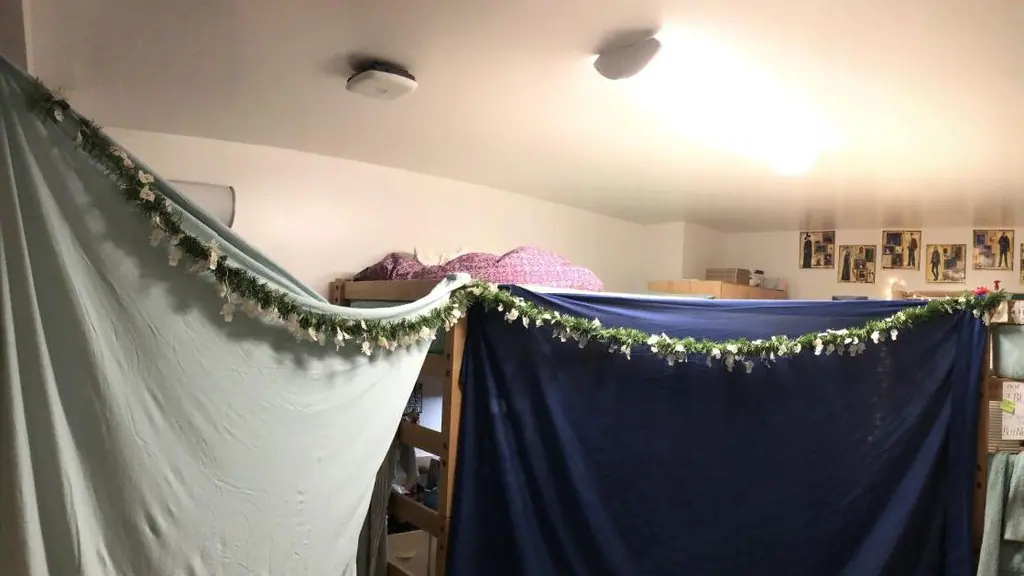
1. Bunk-bed curtain den
Clip two sheets along the edge of the top bunk so they hang down and enclose the bottom bunk, leaving a gap at one end as a door. Instant cabin.
Ages: 3–12. Safety: play on the bottom bunk only, keep the top bunk for sleeping, and never use string or cord to hang the curtains.
2. Closet hideaway
Empty the floor of a wardrobe or closet, add a cushion and a lantern, and you have a secret room.
Ages: 3–10. Safety: remove the door or prop it fully open so it cannot close or latch with a child inside, and clear out hanging bags, belts and anything with a loop.
3. Under-stairs nook
The low triangle under a staircase is a natural den. Hang a sheet across the opening with clips or a light tension rod.
Ages: 3–12. Safety: keep the nook clear of stored cleaning products, tools and anything heavy that could fall from shelves.
4. Drying-rack tent
Open a clothes drying rack (the folding A-frame type), drape a sheet over it and clip the sides. It makes a neat pup tent that takes a minute to set up.
Ages: 3–8. Safety: use a rack that locks open and does not collapse when pushed; check the hinges can't pinch fingers.
5. Hula-hoop canopy
Clip a light sheet or a length of sheer fabric around a hula hoop to make a round canopy, then hang it low over a pile of cushions from a sturdy ceiling hook so the fabric reaches the floor.
Ages: 3–10. Safety: an adult installs the hook and hanging cord, which should be short and well above children's reach, never a loose loop they could get tangled in.
6. Cardboard-box cave
A large appliance or moving box on its side, with a door cut by an adult, is the den children never tire of. Add a window, a sign and a blanket floor.
Ages: 2–8. Safety: remove staples and tape strips, and leave the box open at one end for air.
7. Box tunnel
Line up two or three open-ended boxes to make a crawl-through tunnel. ZERO TO THREE describes a similar "tunnel vision" game for 2-year-olds that builds motor planning and coordination.
Ages: 2–6. Safety: keep both ends open so a crawler can always go straight through.
8. Behind-the-sofa corridor
If your sofa is heavy and stable, ease it a couple of feet away from the wall and roof the gap with a sheet clipped to the sofa back.
Ages: 4–10. Safety: only with a sofa that cannot tip backward, and never let anyone climb on the sofa back.
9. Pop-up tent indoors
A small camping tent or pop-up play tent on a rug makes an "indoor campout" with almost no setup.
Ages: 3–12. Safety: leave the door unzipped and secure any guy lines out of the way rather than strung across the floor.
10. Under-desk office
Drape a sheet over a sturdy desk and turn the space underneath into a secret headquarters, complete with a clipboard and a "do not disturb" sign.
Ages: 4–10. Safety: move desk chairs away, and keep computers, lamps and their cords off the desk while children are underneath.
11. Doorway curtain theater
Fit a light tension rod across a doorway at about a child's shoulder height and hang a sheet from it. Children duck behind for puppet shows and in-and-out games.
Ages: 3–8. Safety: keep the rod light and low; it is a curtain, not a bar to hang from.
12. Broom-handle ridge tent
Rest a broom handle across the backs of two sturdy chairs, drape a sheet over it and clip the edges to the chair legs to make a classic A-frame tent.
Ages: 5–12. Safety: chairs should stand on a rug or against a wall so they cannot slide apart.
Variations by age
| Age | Easiest wins | Ideas for a challenge |
|---|---|---|
| Preschool (3–5) | Box cave, drying-rack tent, box tunnel | Bunk-bed curtains with a "front door" sign |
| Early school (5–8) | Closet hideaway, broom-handle tent, doorway theater | Design a two-room den linking a box cave to a sheet tent |
| Big kids (8–12) | Under-stairs nook, bunk-bed cabin | Plan and build a den for a whole weekend, then improve it each day |
For toddlers, keep things very simple and low: a table tent or a short box tunnel with an adult right there.
Safety first
- Supervise. Stay near children while they build and play, and close by for younger children.
- Nothing heavy on top. Sheets and light fabric only. Never put books, boxes or cushions on a den roof.
- Stable structures. Use sturdy furniture that cannot slide or tip. Never attach a den to a bookcase, dresser or TV stand. The CPSC recommends anchoring furniture with drawers, doors and shelves to the wall, and the AAP advises keeping toys and tempting items off high surfaces.
- Cords away from necks. Keep dens away from corded blinds; the CPSC warns that cord strangulation can happen in moments, even with an adult nearby. Keep hanging cords short and out of reach, and no strings, ribbons or ties in dens for young children.
- Cool LED lights only. No candles, incandescent bulbs or plug-in lamps inside a den, and keep battery lights off bedding.
- Air and a way out. One side open, faces uncovered, no plastic sheeting. Dens are not for sleeping babies.
- Away from heaters. The NFPA advises keeping space heaters at least 3 feet from anything that can burn, including den fabric.
More on these principles on our play safety page.
What they’re learning
Turning an ordinary corner into a den asks children to imagine a space differently, plan it and then solve the practical problems that crop up. The American Academy of Pediatrics' report on play describes how play supports problem-solving, language and self-regulation, and how it strengthens relationships with the adults and siblings who join in. Den building also invites lots of spatial language: under, behind, between, through.
Grown-up tip
Rotate dens rather than keeping one up for weeks. A new hideout every few days feels fresh, and you get your hallway back in between.
More den inspiration
For the classic chair-and-sheet build, start with how to build a blanket fort that stands up and stays safe. If a den is becoming a permanent fixture, see our guide to a DIY reading nook, and for a quiet spot to unwind, try a calm-down den.
Sources
- Preventing Furniture and TV Tip-Overs, HealthyChildren.org (American Academy of Pediatrics)
- Go Cordless: Window Covering Safety, U.S. Consumer Product Safety Commission
- Anchor It!, U.S. Consumer Product Safety Commission
- Safety with heating equipment, National Fire Protection Association
- Activities for Bonding and Learning from 24 to 36 Months, ZERO TO THREE
- The Power of Play: A Pediatric Role in Enhancing Development in Young Children, Pediatrics, American Academy of Pediatrics clinical report (2018), via PubMed