There is a particular silence that falls over a room when a marble starts its journey down a homemade run: everyone watching, waiting to see whether it makes the jump from the third tube to the fourth. When it does, the cheer is loud. When it does not, someone is already reaching for the tape.
A cardboard marble run is one of the best recycling-bin builds there is. It costs almost nothing, it fits on a wall, a door or the side of a big box, and it can be rebuilt endlessly. Along the way, children run into real physics: gravity, slope, speed and friction. This project suits children from about 5 to 12, with a safe version for households where toddlers are around.
You’ll need
- 8–12 cardboard tubes from paper towels, wrapping paper or toilet paper
- A large, sturdy cardboard box (an appliance or moving box is ideal) or a section of wall or door
- Masking tape or painter's tape (low-tack for walls)
- Child scissors, plus adult scissors for cutting thick tubes
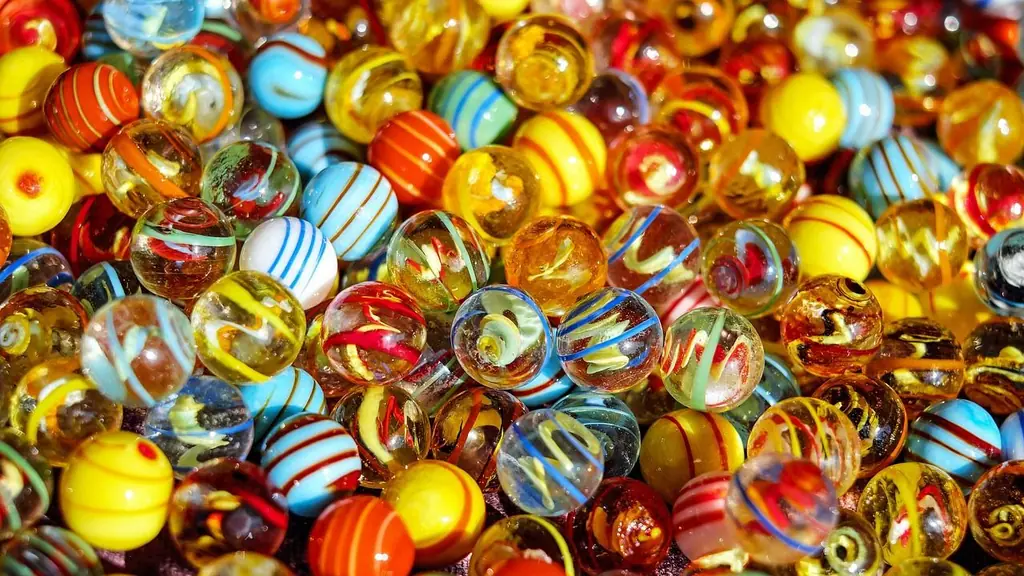
- Marbles for children aged 5 and up, or for mixed-age homes: ping-pong balls, large pom-poms or balls bigger than 1.75 inches (44 mm) across
- Cups, small boxes or a tray to catch the marbles at the bottom
- Optional: a funnel, paper plates, egg cartons, a timer, a pencil and paper for plans
Building the run
- Choose your base. For a box run, stand a large box upright against a wall so it cannot tip. For a wall or door run, test a small piece of tape first on a hidden spot to make sure it peels off cleanly.
- Prepare the tubes. Leave some tubes whole for tunnels. Cut others in half lengthwise to make open channels so you can see the marble roll. An adult can make the first cut with scissors; children can trim.
- Plan the path. Sketch a zigzag from top to bottom. Each piece should slope down and end above the start of the next.
- Tape the first piece. Start at the top. Tape a tube at a gentle downward angle. Start shallow; it is easier to tilt a tube more than to slow down a marble that is flying out.
- Add the next pieces. Tape each tube so the marble drops from the end of one into the start of the next. Overlap the ends or add a cut paper cup or a funnel as a "catcher" where the drop is tricky.
- Test after every piece. Roll a marble from the top each time you add a section. Fix problems straight away: tilt a tube more if the marble stops, add a wall of tape or card if it flies out.
- Finish with a target. Put a cup or box at the bottom. Add a bell, a stack of paper cups to knock over or a "finish line" flag.
- Time it. Use a timer to see how long the marble takes from top to bottom.
The science in plain words
- Gravity pulls the marble down. A tube gives it a path to follow as it falls.
- Slope controls speed. A steeper tube makes the marble go faster; a gentler one slows it down.
- Speed and corners: a fast marble is harder to turn. It may fly out at a bend or overshoot the next tube, which is why steep sections often need walls or catchers.
- Friction: rougher surfaces slow the marble a little. Try a strip of paper towel or felt in one tube and compare.
- Energy: the higher the starting point, the more the marble has to "spend" on the way down.
Challenges to try
| Challenge | Goal | Hint |
|---|---|---|
| Slow motion | Make the marble take as long as possible | Use gentle slopes and lots of back-and-forth turns |
| Speed run | Make the fastest route that still lands in the cup | Fewer, steeper pieces, with walls at bends |
| The jump | Marble leaves one tube and lands in another across a gap | Start with a tiny gap and widen it each time |
| Splitter | One path divides into two | A cut paper cup with two exits |
| Precision | Marble lands in a small cup every time, five times in a row | Fine-tune the final angle |
| Loop the box | Run goes around two sides of the box | Cut slots in the box corners for tubes |
Variations by age
Early school (5–8)
- Build on the side of a box laid against a wall, at the child's eye level.
- Start with three or four tubes and add more as they get the idea.
- Use bigger balls if marbles keep escaping; success matters more than speed.
- Encourage talking about it: "faster," "slower," "steeper," "it fell out because…"
Big kids (8–12)
- Plan the whole run on paper first, then build and compare to the plan.
- Measure the drop height and the time, and try to beat their own record.
- Add moving parts: a cardboard flap that tips, a funnel spiral made from a paper plate, a lift made from a cup and string operated by an adult or older child (keep string away from younger children).
- Challenge them to build a run that works with two marbles racing on separate paths.
Safety first
- Marbles are a choking hazard. U.S. federal rules require marbles sold for children 3 and older to carry a choking warning, and balls small enough to pass through a 1.75-inch (44.4 mm) opening are classed as small balls. The AAP lists marbles among common choking hazards for young children.
- When toddlers are around: Use ping-pong balls, large pom-poms or balls bigger than 1.75 inches (44 mm) across instead of marbles, and count every marble back into a lidded container after play. Check the floor and under furniture.
- Older siblings: Explain why the marbles stay out of reach of babies and toddlers.
- Walls and doors: Use low-tack tape and test it on a hidden spot first. Do not hang heavy pieces above head height.
- Stability: Brace tall boxes against a wall so they cannot topple onto a child.
- Cutting: Children use child scissors; adults cut thick tubes and box slots. No craft knives for children.
- String: Keep any string or cord away from young children's necks.
- See our general safety principles.
What they’re learning
Building a marble run gives children practice in planning a sequence, testing and adjusting, predicting cause and effect, and using words like steep, gentle, faster and slower. Fitting tubes in space also exercises spatial thinking; research links spatial play such as building and puzzles with spatial skills, though those studies show associations rather than proof of cause.
Grown-up tip
Number the tubes on the back with a marker before you take a good run apart. Next time, children can rebuild it in minutes and then focus on improving it.
Keep building
Cutting and joining cardboard is a skill in itself; our guide to cutting, joining and folding cardboard covers safe tools for each age. A marble run also fits neatly into a junk modeling station stocked with tubes and boxes. For more ramp ideas, see STEM building challenges by age, and if younger children share the space, read our toy safety checklist by age.
Sources
- 16 CFR 1500.19: Misbranded toys and other articles intended for use by children, Electronic Code of Federal Regulations
- Choking Prevention for Babies & Children: What Every Parent Needs to Know, American Academy of Pediatrics (HealthyChildren.org)
- Better Kid Care, Penn State Extension
- Building Blocks for Developing Spatial Skills: Evidence From a Large, Representative U.S. Sample, Psychological Science (Jirout and Newcombe, 2015)