Grown-up tip
About this page. Densters, the publication you are reading, is an independent site about imaginative play. It is not affiliated with Kidesign or Densters Ltd, and it does not make, sell, support or represent the Densters toy. This page exists because people still follow old links to this address looking for the toy, and they deserve a straight answer about what it was.
Between 2016 and the early 2020s, densters.com was the home of a small British toy with a simple idea behind it: blanket forts fall down because blankets slip off furniture, so give children something friendly that holds the blankets on. The toy was called Densters, and this is a short, factual account of where it came from and what became of it, pieced together from public records and archived copies of the old website.
What Densters were
Densters were a family of six flexible "toy monsters" made by Kidesign, a small London design studio that worked on educational toys and children's design workshops. Each character was really a connector. Placed on a chair, a door or a curtain rod, it gripped a sheet or blanket so children could build a den using the furniture already in the room.
According to the original 2016 website and the later product page, each character attached in its own way:
| Character | How it held on |
|---|---|
| Cheekaboo | Clamped onto shelves, chairs and tables |
| Hoopsta | Hooked around curtains and knobs |
| Snella | Stuck to smooth surfaces such as windows with a suction base |
| Wizetta | Curled around handles and rods |
| Grumpo | Tucked under a door or wardrobe and gripped fabric using the door's weight |
| Zigzies | Small clips that joined sheets and blankets together (the starter set had three) |
The second idea was that the toys should not end up forgotten in a box. Each one was given an everyday "day job" around the house: the campaign listed a bag hook, a cable holder, a bookmark, a door stopper, a bracelet and a phone stand. The makers described the material as food-grade, BPA-free silicone and labeled the set for children aged 3 and up. Those are the manufacturer's own descriptions, repeated here as history rather than as any safety assessment.
A short timeline
- October 2016. Densters Limited was registered as a UK company. Companies House lists its business activities as toy manufacture, design and education.
- 31 October to 2 December 2016. Kidesign ran a Kickstarter campaign for Densters from London. It closed with 513 backers pledging £21,566 against an £18,000 goal, and Kickstarter tagged it as a "Project We Love". The campaign page remains the most complete public record of the toy.
- 2017. Kidesign showed Densters to families at events in London, including a drop-in workshop on its stand at the Imperial College London Alumni Weekend showcase and a "Den Day" creative workshop held with Save the Children in June.
- Early 2018. Densters were exhibited at Spielwarenmesse, the international toy fair in Nuremberg, Germany.
- 2018 to 2021. densters.com forwarded visitors to Kidesign's own website, where Densters sat alongside the studio's other projects. Kidesign later also offered a Densters card game built around design challenges.
- By 2022. The UK retailer JML listed Densters as den-building monster clips.
- 2024 onward. The address was no longer used for the toy. It was parked and then used by unrelated operators for spam pages, none of which had anything to do with Densters or Kidesign. This independent publication has no connection with any of the address's earlier users.
We have not found reliable records of when Densters stopped being sold, and we make no claim about whether sets are still available anywhere.
What it got right about forts
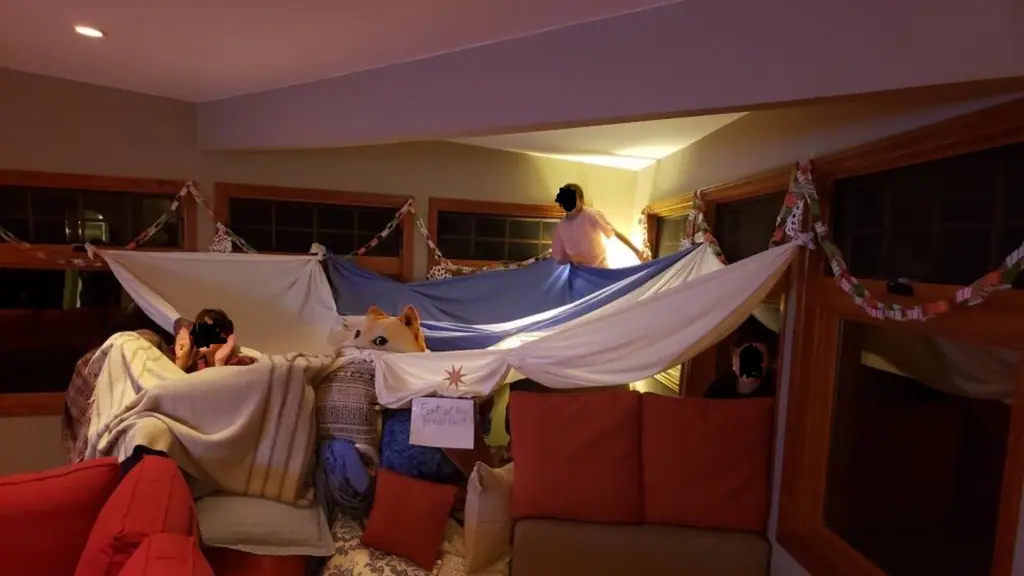
Anyone who has built a sheet fort knows the problem Densters set out to solve. The roof sags, an edge slides off a chair back, someone crawls in too fast and the whole thing comes down. The answer most families reach for is weight, piling books or cushions on the edges, which is exactly what you do not want above a child's head.
The Densters approach was the opposite: hold the fabric in place with small grips at the edges and keep the roof light. That principle is worth keeping whether or not you ever owned the toy. A fort should stay up because its edges are clipped, tucked or tensioned, not because something heavy is sitting on top.
Everyday alternatives you probably already own
You do not need a special kit to build a sturdy den. These household connectors do much the same job, each with a caveat:
- Wooden clothespins. Light, cheap and easy for preschoolers to squeeze. They hold thin sheets well but slip on thick blankets.
- Large binder clips. Strong grip on chair backs and table edges. The metal arms can pinch fingers, so a grown-up should place them for younger children.
- Chip clips and bag clips. Wide jaws, gentle spring and easy for small hands. Good for joining two sheets together.
- Spring clamps with padded tips. Very secure on thick furniture edges, but strong springs mean they are for adults to place and remove.
- Tucking and tension. A sheet tucked deep under sofa cushions or stretched taut between two heavy chairs is often all you need.
We compare these options side by side, with age notes, in our guide to clothespins, clamps and chip clips, and walk through a complete build in how to build a blanket fort that stands up and stays safe.
Safety first
- Stay close. Fort play needs an adult nearby, and within arm's reach for toddlers.
- Nothing heavy on the roof. Use sheets and light blankets only. Never weigh down a roof with books, boxes or cushions.
- Anchor to stable furniture. Use sturdy chairs, sofas and tables. Never tie or clip a fort to a bookcase, dresser or TV stand that could tip; tall furniture should be anchored to the wall in any home with children.
- Keep cords away from necks. Build away from corded window blinds, and keep strings, ribbons and ties out of young children's reach.
- Small clips for older children. Small clips and anything that fits in the mouth are not for children under 3 or any child who still mouths objects.
- Cool LED lights only. No candles, incandescent bulbs or plug-in lamps inside a fort, and keep battery lights off bedding.
- Air and a way out. Leave one side open, keep faces uncovered, and keep fort fabrics well away from heaters. Forts are for play, never for babies to sleep in.
More on the principles behind these rules is on our play safety page.
Where to go from here
If you arrived looking for the Densters toy itself, the Kickstarter campaign page listed below is the best surviving public description of it. If you arrived because you love forts, you are in the right place. Start with the blanket forts and dens topic, try five sofa-cushion fort designs, or print the blanket fort safety checklist before the next rainy afternoon.
Sources
- DENSTERS! Toy monsters that build blanket forts & dens!, Kickstarter (campaign by Kidesign, 2016)
- densters.com home page, November 2016 (archived copy), Internet Archive Wayback Machine
- Densters product page, Kidesign (archived copy), Internet Archive Wayback Machine
- Alumni Showcase in the Innovation Zone, 2017 (archived copy), Imperial College London, via Internet Archive
- Densters @ World's biggest toy fair! (archived copy), Kidesign, via Internet Archive
- DENSTERS LIMITED, company number 10417187, Companies House (UK)